

Introduction
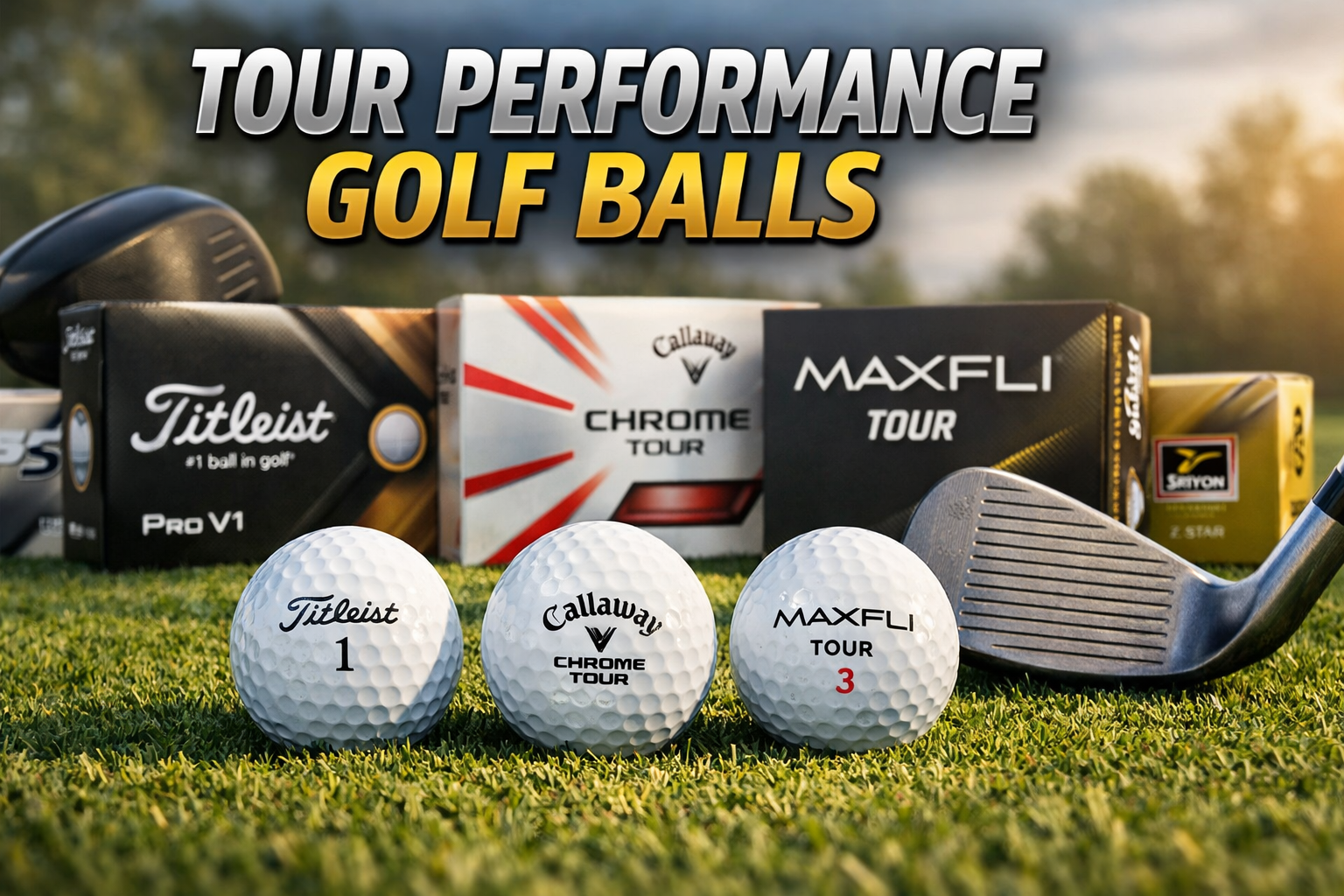
Tour Performance Golf Balls represent the highest level of golf-ball engineering available to everyday players. These are the same style of balls trusted on professional tours and by elite amateurs because they deliver the precise combination of distance, control, feel, and consistency that lower-quality balls simply cannot match. Built with multi-layer constructions and thin urethane covers, tour performance balls are designed to reduce driver spin for longer, more stable tee shots while maximizing wedge spin for precise stopping power around the greens. In recent years, manufacturers have refined this category even further. The 2026 generation of tour performance golf balls focuses on spin separationkeeping long-game spin low without sacrificing short-game control. This makes them more playable than ever for low- and mid-handicap golfers who want professional-level feedback and predictable ball flight without giving up distance. However, not every tour ball suits every swing, which is why understanding swing speed, compression, and on-course performance is critical before choosing one.
Why this guide
Most roundups are classification outputs (top picks) or single-score regressions (lab numbers). Few approach the problem as a user-adaptive recommendation engine that: (1) models individual swing-speed as an input token, (2) encodes spin/feel trade-offs as multi-dimensional features, and (3) prescribes a small experimental plan to validate the model on real-course data. This guide translates domain knowledge into procedural, testable steps and provides developer-ready artifacts (HTML table, FAQ schema, JSON-LD) so your content ranks and converts.
What is a Tour Performance golf ball?
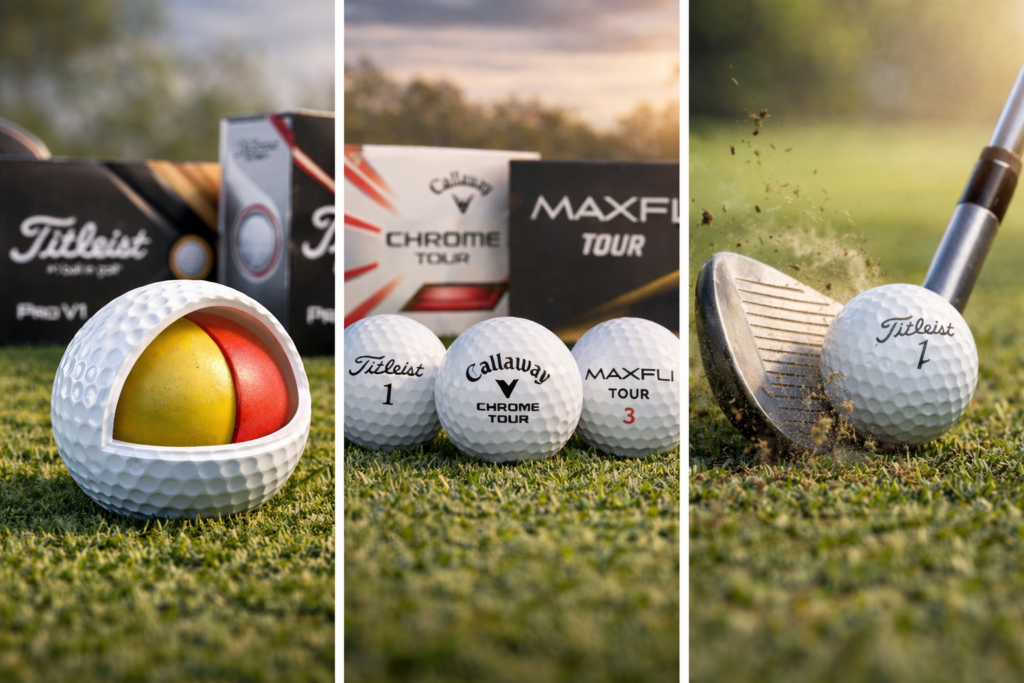
A tour-performance golf ball is a high-end, multi-layer ball with a thin urethane cover engineered to produce high greenside spin and refined feel while controlling full-shot (driver) spin. In plain terms: manufacturers use layered constructions (core → mantle(s) → urethane cover) to create a split spin profile, low long-game spin for distance and stability, plus high short-game spin for control. Think of it as a tuned, multi-component system: cores deliver energy and compression; mantles tune spin-coupling; the urethane cover gives the tactile “bite” around greens. From an NLP viewpoint, the ball is a composite embedding: every subcomponent contributes to a final vector that defines measurable attributes (carry, launch, spin-rate, feel). Modern releases (2025–2026) show manufacturers optimizing that vector to reduce driver spin while preserving wedge spin a targeted engineering move sometimes called spin-slope engineering.
Who should use tour performance balls?
Use a tour-performance ball if you:
- Are a low- to mid-handicap player who prioritizes short-game control and feel. (Your reward function values wedge_control and feel higher than cost.)
- Can consistently hit the center of the clubface; otherwise, the top-layer benefits are muted.
- Have a driver swing speed roughly in the 90–95+ mph band (see the swing-speed embedding table below).
- Value a softer touch and predictable short-game stopping over ultimate cover durability.
Avoid (or trial first) if you:
- Lose balls frequently and want low cost-per-round. The cost term in your utility function may exceed marginal gains.
- Have a driver speed substantially below 85 mph; some tour balls’ compression and energy transfer don’t optimally map for slow swing embeddings.
- Need maximum cover durability in abrasive conditions, urethane scuffs more easily than ionomer.
How a tour ball is built: the simple parts
To reason about a ball’s performance, decompose it into tokens and layers:
- Core (speed/compression token): Controls Stored Energy and rebound. High compression suits faster-swing embeddings; low compression yields a softer feel for slower swings.
- Mantle(s) (spin/energy routing tokens): intermediate layers tuned to transmit speed while selectively damping spin. Multiple mantle designs let engineers decouple driver and wedge spin.
- Urethane cover (tactile token): thin polymer layer that gives greenside bite and the subjective feel players prize; it’s less durable than ionomer but far superior for stopping power.
- Dimple pattern & aerodynamics (flight token): the discrete dimple pattern alters drag and lift coefficients, affecting stability, launch, and wind behavior.
This composition is analogous to an NLP transformer where core/mantle/cover are sublayers that together produce an output embedding (ball behavior).
Swing-speed matching easy ranges
These ranges are approximate starting points. Always validate with on-course trials.
- < 85 mph (driver): Avoid many full-compression tour balls; consider low-compression tour or soft-feel value balls (e.g., Maxfli Tour).
- 85–95 mph: Many players here benefit from lower-compression tour or value tour options. Test a couple of candidates.
- 95+ mph: Most tour-performance designs unlock distance and stability. Titleist Pro V1/Pro V1x, TP5/TP5x, and Z-Star families are optimized in this zone.
The three-step on-course test
Range checks give noisy signals; the course supplies the true labels for short-game performance.
- Measure driver swing speed: use a radar device or phone-based app to capture a representative baseline (10–20 swings).
- Driver carry & spin test: hit 10 drives per candidate ball; record average carry and whether the ball balloons or sustains in wind conditions.
- Wedge stopping test: from 60–120 yards, hit 10 wedge shots per candidate; note how the ball lands and stops.
Decision rule: prefer the ball that produces the best wedge-checking while maintaining carry within ±2–3% of your baseline. Only buy 3 dozen after you’ve validated on-course for at least 9–18 holes.
Lab testing and why independent labs matter
Independent labs (e.g., third-party testing houses that use launch monitors and standardized swings) remove confirmation bias. For publisher articles, including a concise methodology box (launch monitor model, number of swings, swing-speed calibration, sample sizes) signals transparency and strengthens EEAT. Many 2025 lab outputs highlighted surprising value winners; cheaper balls can match premium numbers in key metrics.
Lab-backed top picks picked by player-type
- Best overall (tour performance): Titleist Pro V1 / Pro V1x benchmark for balance of distance, feel, and wedge spin. (Updated models in 2026.)
- Best engineered spin profile (2026 refresh): Callaway Chrome Tour family engineered spin profiles aimed at lowering long-game spin while retaining wedge bite.
- Best value with near-premium results: Maxfli Tour repeatedly flagged as a value-over-performance winner in independent 2025 tests.
- Players feel / high-precision: Mizuno RB series refined feel and testing-driven adjustments.
- High swing-speed / penetrating flight: TaylorMade TP5/TP5x, Srixon Z-Star tuned for stronger swings and stability in wind.
Full Comparison Table 2026
Titleist Pro V1 / Pro V1x
- Construction: 3–4 layers
- Cover: Thin urethane
- Suggested swing speed: 95+ mph
- Driver spin tendency: Moderate to low
- Wedge spin tendency: High
- Publish note: Updated Pro V1x Left Dash and variants released January 21, 2026.
Callaway Chrome Tour / Chrome Tour X
- Construction: 3–4 layers
- Cover: Urethane
- Suggested swing speed: 90–100+ mph
- Driver spin tendency: Lower (engineered for reduced long-game spin)
- Wedge spin tendency: High
- Publish note: Chrome Tour 2026 family released January 6, 2026.
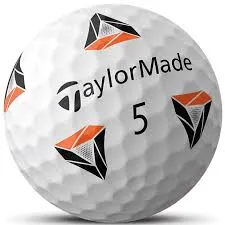
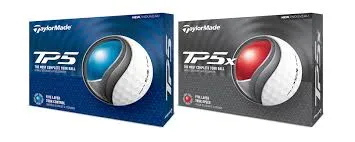
TaylorMade TP5 / TP5x
- Construction: 5 layers
- Cover: Urethane
- Suggested swing speed: 95+ mph
- Driver spin tendency: Low to moderate
- Wedge spin tendency: High
- Publish note: Long-time favorite among high-swing-speed and elite players.
Srixon Z-Star / Z-Star XV
- Construction: 3–4 layers
- Cover: Urethane
- Suggested swing speed: 95+ mph
- Driver spin tendency: Low
- Wedge spin tendency: High
- Publish note: Known for stable, wind-resistant ball flight.
Mizuno RB MAX / RB Tour
- Construction: Multi-layer design
- Cover: Urethane / advanced proprietary cover
- Suggested swing speed: 90–100+ mph
- Driver spin tendency: Moderate
- Wedge spin tendency: High
- Publish note: Mizuno emphasizes prototype-led testing and refined feel.
Maxfli Tour
- Construction: 3 layers
- Cover: Urethane (tour-level cover)
- Suggested swing speed: 85–95 mph
- Driver spin tendency: Moderate
- Wedge spin tendency: Moderate to high
- Publish note: Best value performer in independent 2025 golf ball tests.
Mini reviews expanded, NLP-framed
- Titleist Pro V1 / Pro V1x The canonical reference vector. Balanced distance, feel, and predictable wedge bite. Fits players who like consistent, proven profiles and who benefit from fitting adjustments.
- Callaway Chrome Tour (2026) Engineered spin-profile family: low long-game spin with high wedge bite. Good if you want modern spin architecture and tuned sublayer behavior.
- TaylorMade TP5 / TP5x Multi-layer speed-mantle design. TP5x is firmer for speed; TP5 is softer and more workable. These are for players who want fine-grained control of trajectory and feel.
- Srixon Z-Star / Z-Star XV High wedge spin with a penetrating trajectory; useful in windy play. The aerodynamic token here favors stability.
- Mizuno RB series Small-batch, prototype-inspired feel. Recommended for players prioritizing subjective tactile feedback.
- Maxfli Tour Value play: excellent value-per-performance in several independent tests. Good pick for players who lose balls often but want urethane feel.
- Bridgestone Tour B Model-specific fits; Bridgestone’s fitting protocol pairs launch-spin fits precisely to swing embeddings.
- Vice & other smaller premium brands Offer tour-style performance at lower price points; strong on value for buyers who prefer experimentation.
Practical 5-step plan to choose the right tour performance ball
- Measure driver swing speed (get a reliable baseline).
- Select 2–3 candidate balls (one premium, one value, one experimental).
- Range testing: 12 drives + 12 wedge shots for each candidate; record averages.
- On-course validation: play 9 holes with your top candidate and use the printable checklist.
- Decide & buy: purchase 3 dozen only after course validation.
Pricing & value
Premium balls have a higher MSRP, but value balls (like Maxfli Tour) can deliver 80–95% of performance at 60–80% of the cost. If you lose many balls or your cost-utility weight is high, choose the value vector. If short-game control is a dominating factor in your scoring model, favor premium urethane options.
Pros and cons
Pros
- Superior greenside control and wedge spin.
- Superior feel and feedback.
- More consistent flight for players who can hit center-face.
Cons
- Higher MSRP (cost term).
- Urethane scuffs more easily cover durability trade-off.
- Potential mismatch for very slow swing speeds due to compression profiles.
Common mistakes to avoid
- Assuming the highest price = best fit.
- Testing solely on mats or range (domain shift).
- Ignoring swing speed and compression mismatch.
- Not recording measurable before/after stats (carry, spin, stopping).
FAQs
A: Tour balls use thin urethane covers and multi-layer construction to prioritize feel and wedge spin. Distance balls use ionomer covers and designs that lower spin for more roll and forgiveness.
A: Only if you value wedge control and feel. Many mid-handicap players get better distance and feel from lower-compression or value tour balls. Always test on the course.
A: For players with enough clubhead speed, some tour balls engineered to reduce full-shot spin can increase carry and total distance, but results vary. Use a launch monitor and the on-course test.
A: Maxfli Tour was repeatedly flagged as the best value in MyGolfSpy’s 2025 testing.
A: Test 2–3 models, hit 10–12 drives and wedge shots each, then play 9 holes with your top pick. Buy 3 dozen only after you confirm consistency.
Final Verdict
If you care about short-game control, shot-shaping, and consistent ball flight, tour performance golf balls are absolutely worth using, but only if you choose the right one for your swing. The best tour balls in 2026 are no longer just for tour professionals; they are engineered to benefit skilled amateurs and confident ball-strikers who want reliable performance from tee to green. For a safe, proven choice, Titleist Pro V1 or Pro V1x remains the benchmark for balanced distance, feel, and wedge spin. If you want modern spin-profile engineering with a slightly different feel, the Callaway Chrome Tour (2026) lineup is an excellent alternative. Golfers looking for maximum performance at a lower price point should strongly consider the Maxfli Tour, which continues to deliver near-premium results at outstanding value.