

Introduction
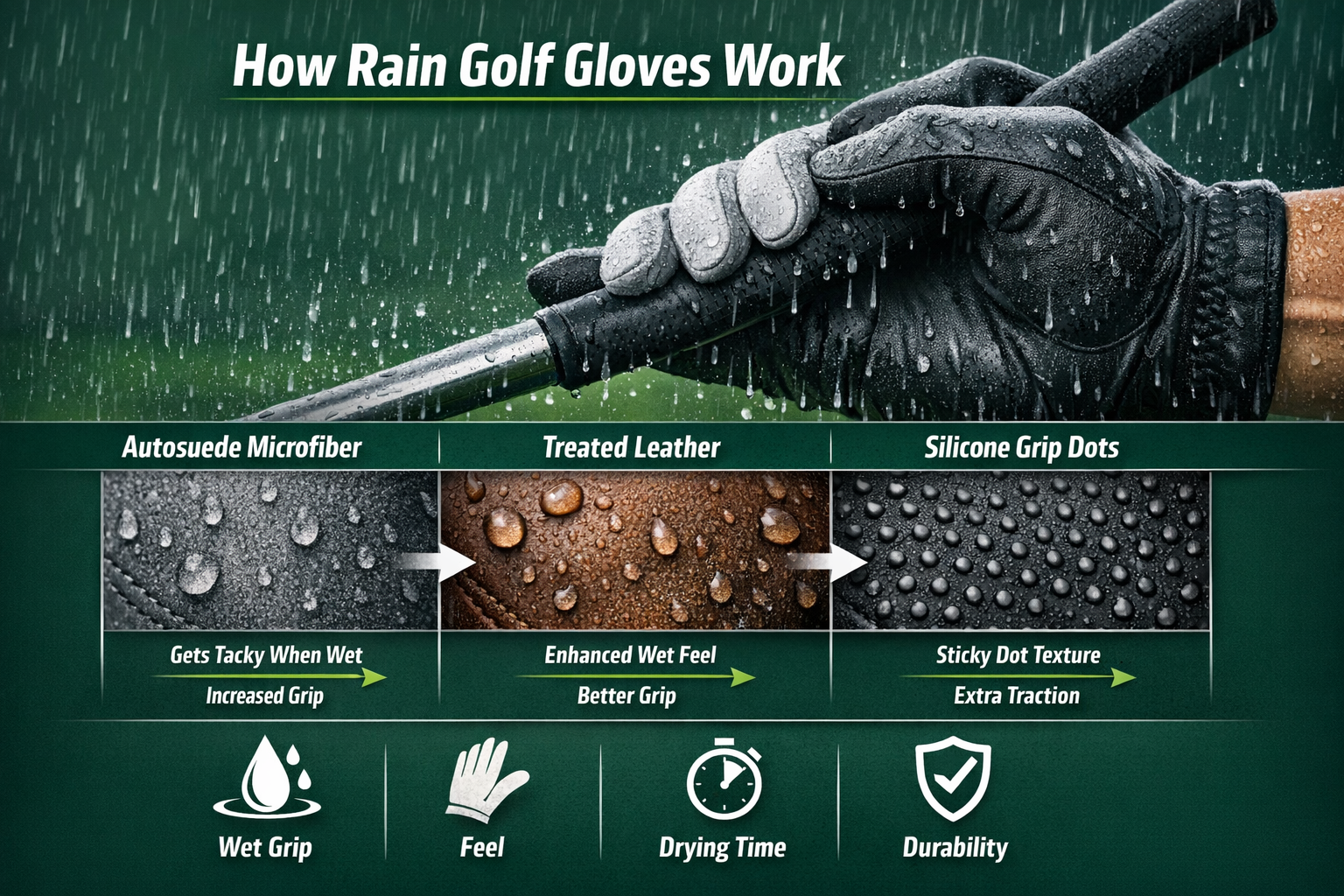
Playing golf in the rain doesn’t have to mean slipping grips or lost confidence. Rain Golf Gloves are specially designed to increase traction when wet, helping you maintain control, feel, and consistency even in heavy moisture. Unlike standard leather gloves, rain gloves use advanced palm materials that actually become tackier when damp. This infographic explains how rain golf gloves work, breaking down the three most common palm technologies: autosuede microfiber, treated leather, and silicone grip dots, and how each reacts to water. You’ll also see how rain gloves compare in wet grip, feel, drying time, and durability, so you can quickly understand which type performs best in rainy conditions.
Top Picks at a Glance
- Best overall: FootJoy RainGrip has consistent tack and value for most players.
- Best feel (thin + tack): Red Rooster Rain Rooster super-thin treated palm + silicone dots.
- Best premium wet performance: TaylorMade Rain Control engineered for long downpours.
- Best leather / classic feel in wet: Zero Restriction treated leather models.
- Best feel + modern tech: HIRZL TRUST Control (GRIPPP tech), high wet traction with a soft touch.
Why a Rain Golf Glove Matters
When the club-to-hand interface becomes lubricated by water, the coefficient of friction drops. Players compensate by increasing grip force, which tightens wrists and destroys swing tempo. The correct rain glove restores friction, maintains clubface control, and reduces compensatory tension that costs distance and accuracy. From a system-design perspective, a rain glove is a thin friction-restoration layer that optimizes three signals simultaneously: tactile feel, sustained tack under moisture, and mechanical durability across repeated cycles of wetting and drying.
How Rain Golf Gloves Work Materials & Tech
Different manufacturers adopt one of several strategies to keep you gripping through precipitation. Below each approach is described with plain-English technical detail and practical implications.
Autosuede & Synthetic Suede
- Signal: microfibers with raised nap.
- Mechanism: When slightly damp, capillary effects and microfiber morphology increase surface adhesion and tack.
- Pros: Great balance of grip and feel; predictable.
- Cons: Can feel different when fully dry; nap wears with abrasion.
Treated Leather
- Signal: real leather with specialized tanning and hydrophobic/tacky surface treatment.
- Mechanism: Retains leather’s compliance and contact area while offering chemically boosted wet tack.
- Pros: Classic leather feel with better wet performance.
- Cons: Often pricier; sizing may skew smaller.
Silicone micro-dots & printed palm textures
- Signal: patterned polymer dots or prints bonded to the palm.
- Mechanism: Provide discrete contact points with high friction coefficients; small-profile so feel remains thin.
- Pros: Thin, natural clubfeel and strong initial tack.
- Cons: Dots may wear off over high abrasion; pattern design matters.
Water-resistant vs. fully waterproof
- Most high-performance rain gloves are water-resistant rather than waterproof: full waterproofing tends to isolate tactile sensation and reduce feedback. The best designs achieve a trade-off: keep the palm tacky while allowing breathability.
Testing Metrics That Add Credibility
For a review to be authoritative, present repeatable, quantified metrics rather than only subjective opinions. If you publish numbers, readers and NLP systems alike can parse and trust your judgments.
Include these tests (use consistent protocols and units):
- Wet Grip Score (1–10): Standardized tug/grip test after a 10-second spray and 30-second settling.
- Dry Feel Score (1–10): Subjective feel when dry: compliance, feedback, and thickness.
- Drying Time (minutes): Time until glove returns to usable tack after heavy saturation.
- Durability (estimated rounds): Measured acceleration-wear test or crowd-sourced round-count median.
- Fit & Sizing Consistency: Measured against a standard hand circumference and recorded brand deltas.
- Price / Value Score: Normalized performance-per-dollar index.
Providing methodology is critical: show test conditions (temperature, water hardness, spray pressure) so results are replicable.
Best Rain Golf Gloves
Below are ready-to-publish review modules (each ~200–350 words). Each module includes who it’s for, features, pros/cons, and a quick usage tip.
Best Overall FootJoy RainGrip
Why it cut: FootJoy’s RainGrip uses an autosuede knit palm that becomes tackier when damp, with a quick-dry back panel for comfort. It hits the sweet spot of price, performance, and availability.
Who it’s for: Players who want a reliable, mid-priced rain glove that performs across a range of light and moderate downpours. Great for club players and weekend warriors.
Key features: autosuede palm; ventilated quick-dry back; secure ComforTab closure; consistent sizing.
Performance snapshot: Wet Grip Score: usually 8/10 in independent tests; Dry Feel: 7/10. Drying Time: moderate benefits from rotating pairs.
Pros: predictable tack, affordable, and widely available; strong value-per-round.
Cons: Some players dislike the “different” feeling when used dry; nap will flatten over many rounds.
Tip: Pre-dampen the palm slightly on a cool, wet morning for better early-round tack.
Best Feel + Modern DTC Option Red Rooster Rain Rooster
Why it cut: Red Rooster focuses on ultra-thin palms treated to improve wet adhesion, often augmented by silicone micro-dots. The thin structure preserves clubfeel.
Who it’s for: Players who prioritize immediate feedback and the thinnest possible palm while retaining reliable wet grip.
Key features: treated ultra-thin palm, silicone dot pattern, direct-to-consumer pricing.
Performance snapshot: Wet Grip Score: high for initial contact (8–9); Dry Feel Score: 9/10; Durability: dependent on how many rounds you run between washes.
Pros: minimal bulk, fantastic clubfeel, competitive price.
Cons: newer brand history; long-term durability is still being proven in broad samples.
Tip: Buy true size thin palms expose sizing error more than autosuede alternatives.
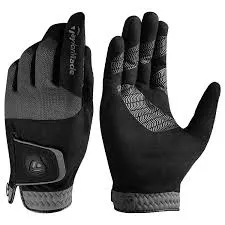
Best Premium Wet Performance TaylorMade Rain Control
Why it made the cut: Built for prolonged showers and saturated links, TaylorMade’s Rain Control places engineered synthetic suede and a textured palm at the forefront of consistent tack in sustained wet conditions.
Who it’s for: Frequent wet-round players, links golfers, and those who need a glove that retains performance across multiple heavy rain episodes.
Key features: engineered synthetic palm, broad texture patterning, tailored closures.
Performance snapshot: Wet Grip Score: 9/10 in steady conditions; Dry Feel Score: 6–7/10; Drying Time: longer if saturated.
Pros: excellent sustained tack; well-engineered texture; brand trust.
Cons: can retain water if fully saturated; some players find the feel slightly more synthetic.
Tip: Pair it with a thin regular glove on the non-lead hand if you want extra tactile feel there.
Best Leather-ish Wet Option Zero Restriction (treated leather)
Why it cut: Zero Restriction offers specially treated goat leather that retains classic leather compliance while improving wet performance through chemical tanning.
Who it’s for: Conservative players who refuse to give up leather’s feedback and want improved wet behavior without a synthetic feel.
Key features: treated goat leather, classic closure, premium fit.
Performance snapshot: Wet Grip Score: 7–8/10; Dry Feel Score: 9/10; Durability: 30–80 rounds with good care.
Pros: leather touch with wet behavior; attractive for tradition-minded players.
Cons: treated leather can run a half-size small; higher retail price.
Tip: Check sizing closely, consider a half-size up if between sizes.
Best Feel + Grip Tech HIRZL TRUST Control (GRIPPP tech)
Why it cut: HIRZL’s GRIPPP tanning and palm engineering combine micro-tanning and structure to create a soft, lasting tack even when wet.
Who it’s for: Players who want premium materials and a combination of soft feel and modern grip engineering.
Key features: micro-suede with GRIPPP tanning, engineered palm structure, premium fit.
Performance snapshot: Wet Grip Score: 8–9/10; Dry Feel Score: 9/10; Durability: strong with care.
Pros: premium feel; strong, long-term tack with proper care.
Cons: pricier; fit precision matters more than with autosuede.
Tip: These last well if you rotate and care for them properly, not casually.
Product Comparison Table Scan Fast
Make this table horizontally scrollable on mobile for the best UX.
| Model | Best for | Palm material | Price range (USD) | Why buy | Watch out |
| FootJoy RainGrip | Most players | Autosuede knit | $25–$35 | Consistent wet tack, quick-dry back | Feels different when bone dry |
| Red Rooster Rain Rooster | Feel + DTC | Thin treated palm + silicone dots | $28–$35 | Thin feel, great initial tack | Newer brand; long-term durability is less proven |
| TaylorMade Rain Control | Heavy rain | Engineered synthetic suede | $30–$40 | Strong, sustained wet performance | Can retain water if saturated |
| Zero Restriction (treated) | Leather feel | Treated goat leather | $35–$50 | Leather touch + better wet behavior | Runs small in some sizes |
| HIRZL TRUST Control | Grip tech + feel | Micro-suede / GRIPPP | $35–$45 | Modern tanning tech, premium feel | Pricier; fit-sensitive |
How to Use Rain Gloves: Practical Tactics That Work
Wear one glove or two?
Most players wear one rain glove on the lead hand (left for right-handers); it’s the thumb and lead palm that most often lose purchase. Wear two only in heavy, persistent rain or if both hands consistently slip.
Pre-wetting trick
Lightly dampen the palm before the opening tee shot. Autosuede Palms often reach peak tack quickly when slightly moist rather than bone-dry.
Towel strategy
Clip a microfiber towel to your cart or bag. Wipe between shots to remove grit and salt; re-dampen as needed to refresh tack (but avoid saturating).
Umbrella & shelter
Use a large umbrella on the tee and keep a dry towel for the critical putting moments. Avoid wiping the clubface with a wet towel when preparing for a putt.
Grip pressure & swing
Wet conditions often cause an unconscious grip squeeze. Rely on the glove for tack; maintain your normal grip pressure and preserve your tempo. Practice swings with the glove on in a dry net to recalibrate feel.
Sizing & Printable Chart
Getting the correct size is more important with thin rain gloves. Use the hand circumference (exclude thumb) measured where the fingers join the palm.
Printable size chart (hand circumference in inches):
- XS: 7.0 – 7.5″
- S: 7.5 – 8.0″
- M: 8.0 – 8.5″
- L: 8.5 – 9.0″
- XL: 9.0 – 9.5″
Fit tips:
- For thin treated palms, buy true size.
- For treated leather, consider a half-size up if you’re borderline.
- Always cross-check brand-specific charts; they vary.
Care, Cleaning & Storage Keep Them Tacky
Rain gloves require more active care than standard leather gloves.
After the round:
- Rinse gently with cold water to remove salt, sand, and dirt.
- Press (do not wring) gently to remove excess water.
- Reshape fingers and lay flat on a clean towel.
- Air-dry away from direct sun and heat sources.
- Rotate gloves; keep 2–3 pairs when rain is frequent.
Cleaning tips:
- Use mild detergent sparingly for odors.
- Avoid bleach, strong cleaners, or abrasive scrubbing that removes nap/tacky treatment.
- For autosuede, once dry, use a soft brush to lift the nap lightly.
When to replace:
- Silicone dots are fading or flaking.
- Autosuede nap flattened to slickness.
- Notable drop in Wet Grip Score or multiple reports of slippage.
Pricing Table
| Type | Typical Price Band | Durability (rounds) |
| Budget rain gloves (basic synthetic) | $15–$25 | 10–20 rounds |
| Mid-range autosuede (FootJoy / DTC) | $25–$40 | 20–50 rounds |
| Premium treated leather / GRIPPP | $35–$60 | 30–80 rounds (with care) |
Common Mistakes to Avoid
- Wrong size: thin gloves magnify fit errors. Measure first.
- Expecting one glove to solve all: material behavior differs (autosuede vs treated leather).
- Not rotating gloves: a single saturated pair will fail quickly.
- Poor care: salt and grit destroy nap and tack. Rinse and air-dry.
- Buying purely on price: cheap gloves can be a false economy if they lose tack quickly.
FAQs
A: Usually no. Most players use one rain glove on the lead hand (left for right-handers). Wear two only in heavy, persistent rain or if both hands slip.
A: Rinse lightly, press excess water out (do not wring), reshape the fingers and palm, and air-dry flat away from direct heat. Use multiple pairs of gloves if you frequently play in the rain.
A: Yes, many rain gloves are fine in sweaty conditions because synthetic palms handle moisture better than untreated leather.
A: No, when cleaned properly, rain gloves are safe. Avoid abrasive cleaners that leave residue on grips.
A: Many testers and users praise DTC brands for thin palms and great feel. They can be good value, but have a shorter public track record than legacy brands. Check independent tests (e.g., MyGolfSpy) for proof.
Final Verdict
If rain is forecast, buy a dedicated rain glove rather than relying on regular leather. For most golfers, FootJoy RainGrip is the best overall pick for consistent wet tack and value. If your priority is the truest feel, try Red Rooster or HIRZL. For heavy, repeated wet play, choose TaylorMade or treated leather options.