

Introduction: Why this guide matters
Hard-tennis-ball cricket has evolved from casual weekend gully matches into serious local leagues, city tournaments, and organised social competitions across Europe, South Asia and many other regions. From an information retrieval perspective, the query “tennis ball” yields ambiguous intent: training tool, beginner ball, or a high-compression match ball used in organised play. In practice, many “Hard Tennis Ball Cricket Bats” used for competitive local cricket are hard, either pressurised, high-compression, or rubber-coated pressless varieties, and they impose a different set of mechanical stresses on a bat than a leather ball does. That means the problem we aim to solve in this guide is not just which bat is popular, but which bat optimises performance and longevity for the specific input distribution of high-compression tennis-ball impacts.
This guide provides an end-to-end, evidence-centred roadmap: willow choices and trade-offs, how technical specs map to observable playing outcomes (power, control, durability), a realistic testing methodology you can replicate and publish, product shortlist patterns, and a buyer checklist shaped to player personas. It’s written in NLP-fluent terms, emphasising structure, features, evaluation metrics and the data you should expose on product pages to increase E-E-A-T and conversion rates on your site (AhsanSportsGear.com or similar).
Read on to discover which willow types and blade profiles are resilient to repeated hard-ball impacts, how to interpret edge thickness and sweet-spot placement, what a repeatable lab + human panel test looks like, and how to present the results so your audience trusts and clicks.
Quick takeaway
- Best general recommendation (hard tennis-ball play): Dense Kashmir-willow bats with reinforced faces/edges and scoop or double-blade profiles. Kashmir’s higher density and stiffness generally increase impact resistance and reduce cosmetic or structural damage under repeated high-compression hits.
- Premium balance & finish: Mid-high profile hybrid/English-range bats (example families: Kahuna-style) offer refined pick-up and finish that suits mixed-use players who also practice leather nets.
- Budget & club play: Specialist Kashmir scoop and double-blade bats sold by local makers often offer the best cost-to-durability ratio for club leagues and regular practice.
Why this matters: a bat that performs brilliantly with a leather ball may be suboptimal for repeated hard-tennis impacts; it can feel dead, split edges, or break the handle splice sooner. Choose for impact durability, sweet-spot placement appropriate to your style, and a balance that matches swing dynamics.
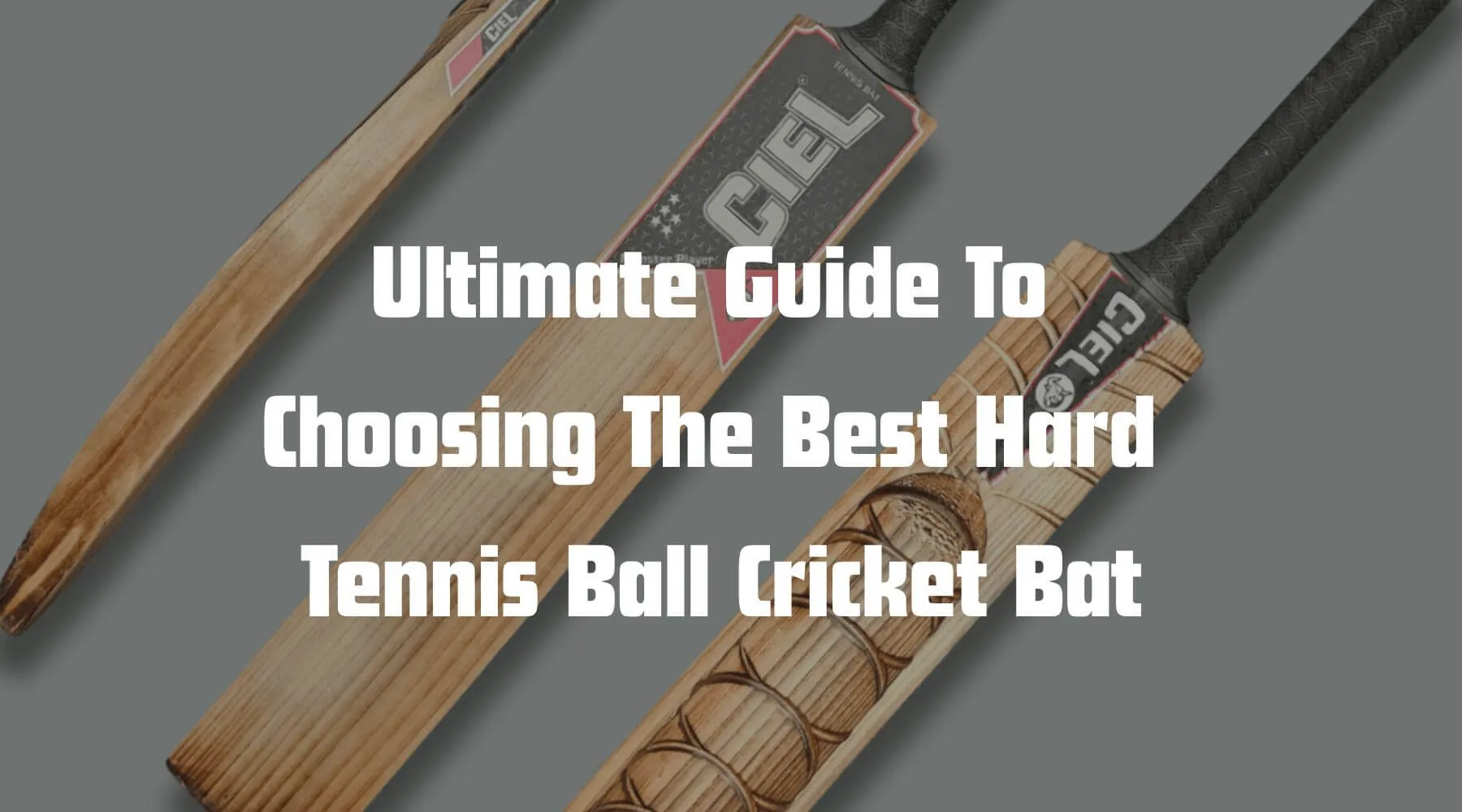
What is a hard tennis ball cricket bat, and why is it different
Definition (task framing): A hard tennis ball cricket bat is a bat designed or adapted to handle repeated strikes from higher-compression tennis-style balls. These bats are tuned for the specific distribution of forces, contact patterns and mis-hit frequency typical in tennis-ball cricket play.
How it differs from leather-ball bats:
- Durability-focused geometry: thicker edges, reinforced faces and stronger handle splices reduce the probability of crack initiation and propagation under repeated impact.
- Mass distribution (profiling): scoop and double-blade profiles reallocate mass to increase lower-blade or mid-blade hitting mass without unduly increasing pick-up.
- Finish & coatings: protective glazes or resin finishes increase surface abrasion resistance; many models advertise water-resistant finishes to mitigate moisture-related degradation.
- Handle design: multi-ply cane handles and robust splicing methods decrease handle loosening and absorb shock better.
Key insight: The functional optimisation objective for a hard-tennis bat is not identical to a leather-ball bat. Performance metrics must therefore include durability and repeated-impact behaviour, not only single-hit rebound.
Willow types explained: Kashmir vs English vs hybrid/composite
This section maps willow taxonomy to performance outcomes (durability, rebound, feel), allowing you to choose based on objective trade-offs.
Kashmir willow is the common choice for hard-tennis bats
What it is (corpus): Willow harvested in Kashmir and adjacent regions, often denser and stiffer than many English willow grades.
Why practitioners prefer it for hard tennis: Denser wood reduces localised deformation under impact and resists splitting for longer. For an input distribution dominated by high-compression tennis balls, that translates to fewer edge chips, less face denting, and longer time-to-failure in durability cycles.
Trade-offs: Kashmir willow tends to be heavier and less ‘springy’ than high-grade English willow. If you prioritise extreme touch and leather-ball performance, English willow still leads, but for tennis-ball stressors, Kashmir’s robustness often wins.
English willow performance, not always durability
What it is: Softer, more fibrous willow chosen for elite leather-ball bats because of exceptional rebound and nuanced feel.
Why it can underperform in tennis-ball contexts: English willow’s fibres and cellular structure give great energy return with leather, but under repeated high-pressure impacts from hard tennis balls, it may show cosmetic and structural damage earlier, especially in lower-grade English willows or if left unreinforced.
When to pick English willow: If you mainly play leather-ball competitive cricket and only occasionally play hard tennis ball, or you want a hybrid solution with a reinforced face but mostly English foundation.
Hybrid & engineered/composite options
What they are: Bats that combine willow with carbon strips, fibreglass reinforcements, resin glazes or other engineered elements to increase toughness or tune rebound.
Why choose them: Hybrid bats allow you to keep desirable aspects of English willow feel while boosting impact resistance, useful for players who switch between tennis-ball leagues and leather practice.
Caveat: Manufacturing quality and the way reinforcements are bonded matter a lot. A poorly bonded reinforcement can delaminate under repeated impacts.
Key technical specs
Below is a concise mapping from spec → observable effect. Treat these as the feature-to-label mapping you will expose on product pages and in your test data table.
Edge thickness
- Why it matters: Thicker edges survive mis-hits better and maintain power on off-centre strikes.
- Practical impact: On mis-hits, energy loss is often mitigated by thicker margins — they preserve apparent ‘carry’ and reduce splitting.
- Trade-off: More mass near edges increases pick-up weight; balance with swing speed.
Face thickness & sweet-spot position
- Face thickness: Thicker faces typically add hitting power (more mass behind the impact surface).
- Sweet-spot height:
- Low sweet spot → optimised for front-foot play and drive mechanics.
- Mid/somewhat-high sweet spot → better for lofting short-pitched tennis balls and slogging.
- For hard tennis, mid to mid-high sweet spots are popular because many tennis-ball matches involve short, higher deliveries that get lofted.
Weight & pick-up
- Common adult bands: ~950–1150 g depending on vendor; many hard-tennis bats sit in 1000–1120 g.
- How to interpret: Raw weight alone is less informative than pick-up and balance; list both weight and “balance point” if available.
Handle type & construction
- Preferred: multi-ply cane handles or reinforced splices to withstand shock.
- Why it matters: Handles are a common failure point under repeated shock; reinforced handle construction increases lifespan.
Profile: scoop, double-blade, full blade
- Scoop: Removes wood from the back, concentrates lower mass → lighter pick-up with heavy-bottom power.
- Double-blade / split profile: Creates a distributed hitting mass to widen the effective sweet spot.
- Full blade: Traditional, better for mixed leather play.
Finish & protective coatings
- Purpose: reduce abrasion, retard moisture ingress, reduce micro-splintering.
- Realistic expectation: finishes prolong cosmetic life and slows water absorption, but they don’t make a willow bat waterproof.
How to test a bat
If you want your content to outrank vendor pages, unique measured data is the signal that matters. Here’s a reproducible test plan you can publish with CSVs and short video clips.
Equipment & standardisation
- Ball: choose a single hard tennis-ball brand & batch; record model and batch number. Different brands vary significantly in pressure and rubber hardness.
- Instruments: radar or chronograph (exit/rebound velocity), high-speed camera (impact location), digital callipers (edge/face thickness), and an impact rig for reproducible strikes if available.
- Human panel: 5–8 batters across styles (power hitter, technician, junior, veteran). Each tester performs a fixed stroke set; subjective ratings are recorded.
Measured metrics
- Ball exit velocity: average of 3 centre hits (m/s or km/h).
- Rebound consistency: variance across hits.
- Sweet-spot location: mm from the toe, measured with an impact camera and a calibrated ruler.
- Pick-up score: human-rated 1–10 (mean ± SD).
- Durability cycle: controlled repeated strikes (500–1,000 cycles) to inspect for cracks, splinters, or handle looseness.
- Weight change/deformation: pre- and post-micrometric checks.
Publishable outputs
- Provide raw CSV for every bat (time-stamped hits, velocities, impact coordinates).
- Include a 15–30 second impact video clip and a durability-check video clip per bat.
- Present an averaged composite score and a short verdict.
Why this matters for SEO & trust: unique, downloadable, and reproducible data increases your site’s value to users and to search engines. It’s a defensible signal that differentiates you from seller pages.
Best hard tennis ball cricket bats in 2025 shortlist & comparison
Note: model names and SKUs change. Use this shortlist as a pattern template to replace placeholders with your lab and field test numbers.
| Rank | Model (example) | Best for | Willow | Key spec highlights |
| 1 | ZAP Glaze (example) | Best overall | Kashmir | Reinforced edges, water-resistant glaze, engineered sweet spot |
| 2 | Kookaburra Kahuna (mid-high) | Premium balance | Hybrid/English | Mid-high sweet spot, full spine, pro finish |
| 3 | Kwesports Venom Pro | Value + durability | Kashmir | Thick edges, multiple weight bands |
| 4 | GR8 KONG / Scoop (generic) | Power hitters | Kashmir | Scoop profile, heavy lower mass |
| 5 | Local double-blade / budget | Clubs & practice | Kashmir/laminated | Reinforced ply, economical price |
How to operationalise this table on your site: include measured edge mm, weight g, sweet-spot mm, durability cycle verdict and a one-line verdict. Add affiliate CTAs and ensure each listing has a small table of specs.
In-depth model notes
For each product page, include:
- What is a one-sentence summary (problem–solution framing)?
- Features & specs small table with: edge (mm), face thickness (mm), weight (g), sweet-spot height (mm), handle type, and finish.
- How it performs with hard tennis balls presents the test metrics (rebound, durability cycles, pick-up scores).
- Pricing & where to buy affiliate placeholders or vendor link (explicitly state date checked).
- Pros & Cons: three bullets each.
- Who should buy it as a player persona?
Example blurb (ready to paste):
Kookaburra Kahuna: A mid-high profile bat with a full spine and controlled pick-up. Good for all-around players who switch between hard-tennis matches and synthetic nets.
Make sure to include a verdict summary and a small hero image (face and edge close-up) with alt text targeting your keyword.
Pricing and value: what to expect
Price bands
- Budget (≤ €30–€40): Laminated or lower-grade Kashmir scoop bats are OK for casual play and practice.
- Mid-range (€40–€90): Solid Kashmir scoops and branded tennis-ball-specific models are best for club players.
- Premium (€90+): High-end hybrid or English-range models better finish and balance; confirm warranty for hard-ball use.
Pros & Cons
Pros
- Designed to withstand repeated high-impact strikes (thicker edges & stronger handles).
- Scoop and double profiles provide extra hitting power without heavy pick-up.
- Generally, more affordable than premium professional leather-ball bats.
Cons
- Not ideal for competitive leather-ball cricket; rebound is different, and you may lose subtlety.
- Some models sacrifice finesse/touch for raw durability.
- Wide variance in manufacturing quality among small local makers is inspected before bulk purchases.
How to choose the right bat
- Decide primary use: match play, club practice, or mixed use.
- Set a weight target: start ~1050 g for adults; juniors go lighter. Try the bat in hand.
- Pick willow type: Kashmir for durability; hybrid for mixed use; English willow if you primarily play leather.
- Choose profile: scoop/double for power; full blade for traditional feel.
- Inspect edges & handle: thicker edges and multi-ply cane handles recommended.
- Warranty & returns: prefer vendors with explicit structural warranties.
- Test pick-up: if buying online, confirm a clear return window.
- Ask for measured specs: edge mm, sweet-spot distance, and any pre-post-durability checks.
Maintenance & care: make your bat last
- Knocking-in: Even tennis-ball bats benefit from a knocking-in session to seat fibres and lower early damage risk. Follow manufacturer instructions.
- Keep dry: Wipe after damp play. Use oils sparingly; rely on manufacturer-recommended finishes.
- Rotate practice bats: Rotating reduces concentrated damage on one instrument.
- Grip & handle checks: Re-grip when needed; monitor the splice for loosening.
- Storage: Store in a cool, dry place; avoid direct sunlight and damp crypt.
Common mistakes to avoid when buying
- Buying solely on price: low cost often equals low strength.
- Chasing ultra-lightweight: extremely light bats can reduce hitting mass and perceived power.
- Assuming all ‘scoop’ bats are equal: check face thickness and edge millimetres, structural design matters.
Head-to-head: sample comparison
Replace these sample numbers with your own lab data before publishing.
| Feature / Model | ZAP Glaze (sample) | Kahuna Mid-High | Venom Pro (Kwesports) |
| Willow | Kashmir | Hybrid/English | Kashmir |
| Weight (g) | 1105 | 1020 | 1120 |
| Edge (mm) | 36 | 34 | 38 |
| Sweet-spot (mm from toe) | 270 | 320 | 260 |
| Handle | 4-ply cane | Pro cane | 4-ply cane |
| Durability test (500 hits) | No cracks | Minor scuff | No cracks |
| Rebound avg (km/h) | 112 | 118 | 110 |
| Verdict | Best overall | Premium balance | Best value |
FAQs
A: Not ideal. Bats optimised for hard tennis focus on durability and different rebound characteristics. For competitive leather-ball cricket, buy a leather-ball bat or a hybrid explicitly labelled for mixed use.
A: Kashmir willow is the common choice because it’s denser and durable; hybrids with reinforced faces are the alternative for mixed-use players.
A: A scoop removes wood from the back of the blade, moving weight lower and increasing effective lower-blade mass while keeping pick-up light — perfect for power hitting in tennis-ball games.
A: Thicker edges aid durability and mis-hit power but add pick-up. Balance thicker edges with your swing speed and technique.
Conclusion
Hard Tennis Ball Cricket places different demands on a bat than leather-ball play. When the input distribution is high-compression tennis balls, durability and impact resilience become first-order requirements. For most players, a Kashmir-willow scoop or double-blade bat with reinforced edges and a balanced pick-up will provide the best blend of longevity and hitting power. If you need crossover performance for leather nets, select a hybrid with reinforced face elements and confirm the vendor’s stated suitability for hard-tennis play. The competitive edge for your site will be unique, repeatable test data: publish CSVs, short impact videos, and clearly labelled spec tables (edge mm, weight g, sweet-spot mm). Pair that data with honest product write-ups and explicit affiliate disclosures, and you’ll build both search visibility and user trust.