



Introduction
The Golf Lob shot is a high, soft-landing short-game technique designed to stop the ball quickly on the green. It’s most useful when you’re short-sided, need to carry a bunker, or have very little room to roll the ball. Played with a lob wedge (usually 58°–64°), the lob shot demands precise setup, controlled wrist action, and confident contact. When used at the right time, it can save strokes and turn difficult situations into easy up-and-downsbut when misused, it can quickly lead to big numbers.
Situation detection when to call the lob intent
Problem framing (intent detection): In practical play, you must first classify the situation. The ‘lob intent’ should only activate when the input features meet a set of preconditions (high prior probability of success). Treat each factor as a binary/continuous feature that the model evaluates.
Use the lob when (positive class):
- Short-sided green: tiny target area, minimal rollout desired. (feature: target_size = small)
- Ball sits up or lies on receptive turf. (feature: lie_quality = high)
- A clear visual landing spot exists (feature: landing_spot_visible = true)
- Need high stopping power (feature: required_rollout ≈ 0)
- You have practiced this shot under similar conditions (feature: confidence > threshold)
Avoid the lob when (negative class):
- Ball Plugged, tight, or heavily rough (lie_quality = low, risk_of_digging ↑)
- Turf extremely firm or sand compacted (spin_attrition ↑, stopping ↓)
- You need a predictable rollout, or you are far from green (bump-and-run is the safer model)
- You have low practice confidence in these conditions (confidence < threshold)
Decision boundary: Lob = high-variance, high-reward model. Only commit when the aggregate predicted success probability exceeds your risk tolerance.
Lob wedge selection: loft, bounce &
Think of wedges as models with different hyperparameters (loft, bounce, grind) that change how they interact with the turf (data).
Typical loft (model family):
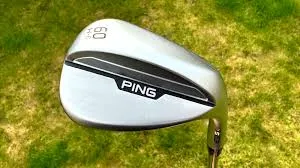
- 58°–60°: primary, most versatile model (balanced bias/variance).
- 62°–64°: specialist models for high-obstacles/flops (higher variance).
Bounce (data interaction parameter):
- Bounce = angle between the leading edge and the sole’s lowest point.
- High bounce (10°+) = robust to soft turf / open-face (reduces digging), good when you open the face.
- Low bounce (4°–6°) = better for tight, firm lies (less sole interference).
Grind (sole topology/regularization):
- Grinds with trailing edge relief behave better when the face is opened (less grabbing).
- Less sole material = more aggressive digging on the open face if you’re not careful.
- Test grinds on your home turf; small changes alter spin and turf interaction.
Practical model selection rules (feature map):
- Soft turf + frequent open face → moderate-to-high bounce + trailing relief grind.
- Tight/firmer turf → lower bounce; avoid extreme face opening.
- If you play flops often, add a 62–64° loft to your bag as a specialist model.
Step-by-step lob shot setup & swing blueprint.
We’ll write the lob shot as an ordered pipeline: input preprocessing, model configuration, forward pass (swing), and post-impact evaluation.
3.1 Input preprocessing (assess & prepare)
- Assess lie: token = sit_up? If false → choose alternate shot.
- Estimate distance to landing spot, obstacles, and green firmness.
- Choose a wedge (model) and determine the face opening (hyperparameter).
3.2 Model configuration (set stance, grip, weight)
- Grip: slightly lighter than full swing (reduce torque noise).
- Stance: narrow (shoulder/hip width), feet close to reduce lateral variance.
- Weight: biased forward ≈ 55%–60% on the lead foot encourages a steeper attack angle.
- Ball position: center to slightly forward of center, not extreme.
3.3 Face geometry (parameter tuning)
- Open the face moderately for extra loft; open further for flop.
- Opening increases effective bounce; adjust accordingly.
3.4 Hands & shaft (input alignment)
- Hands neutral to slightly ahead at address helps ensure the leading edge meets the ball first.
- Avoid excessive forward shaft lean (reduces loft).
3.5 Attack vector (angle of attack)
- Slightly steeper attack than a bump-and-run brush the turf at or just after the ball.
- Aim for a leading edge that “wins the race” to contact.
3.6 Wrist behavior (control signal)
- Maintain wrist extension through impact; avoid flip (premature hand release).
- Controlled hinge on backswing; extend through impact (no violent snap).
3.7 Swing amplitude & tempo (control loop)
- Backswing: ½–¾ length depending on distance.
- Tempo: smooth acceleration through impact distance = tempo + acceleration, not brute force.
3.8 Impact focus (objective)
- Impact should be brushy, confident turf contact producing spin and height.
- Avoid scoop or scoop-like motion.

Core drills for repeatability
Treat drills as data augmentation procedures: they expand the distribution of playable inputs and improve model robustness.
- Tee-Distance Control Drill: Targets at 10, 15, 20 yards. Hit 5 shots per distance using progressively shorter swings (¾ → ½). Record landing proximity. Purpose: distance classification and control. ’t
- Landing-Spot Drill: Place a towel target 10–20 yards out. Aim to land on the towel repeatedly. Reps: 20–40. Purpose: precise landing inference.
- 60° Precision Drill: Use only your 60° wedge for 30 minutes. Track proximity to the hole. Purpose: Reduce model variance by standardizing equipment.
- Towel Wrist Drill: Towel under trailing forearm; maintain through swing. Purpose: enforce extension.
- One-Click Pressure Drill: One-shot per scenario; miss = score. Simulates tournament pressure.
4-Week progressive practice plan
We apply curriculum learning: start with fundamentals, then increase complexity and noise.
Weekly overview
4-Week schedule (table)
| Week | Focus | Sessions/week | Session plan (mins) |
| 1 | Fundamentals | 3 | 30–40: 10 warm chips, 15 towel & tee drills, 5 notes |
| 2 | Distance & landing | 3 | 40–50: 15 tee-distance, 15 landing-spot, 10 60° precision |
| 3 | Pressure & lies | 3 | 45–60: simulated lies (tight, rough, short-sided), 10 logging |
| 4 | Course application | 3 (2 practice + 1 course) | Range 45–60, practice green 45, course 60 (simulate pressure) |

Logging & metrics: Each session log fields: Date, Location, Wedge, Lie, Target distance, Proximity (ft), Clean/fat strike, Notes. Track weekly averages and % of landing target hits.
Advanced variants: flop, long lazy lob, low-spin lob
The Flop (highly parametrized specialist model)
- What: Very open face, very steep attack, maximal height, virtually zero rollout.
- When: Soft turf, big landing area, must clear hazards.
- Risk: Very high on tight/firm lies; expensive failures.
- Drills: Full open-face practice on soft turf, slow-motion reps.
Long Lazy Lob (mid-alt model)
- What: Lower trajectory than flop but still high; less face opening, more swing length.
- When: Need carry but some rollout; longer distances to green.
- Tip: Increase follow-through, reduce wrist snap.
Low-spin lob (control model)
- What: Reduced spin, more predictable rollout.
- How: Slight shaft lean, less wrist release, wedge with gentler groove/aggressive grind avoided.
Equipment & fitting notes
Loft: 58°–60° for most players (versatile). 62°–64° for flop specialists.
Bounce:
- Soft turf/open face → high bounce (10°+
- Firm/tight turf → low bounce (4°–6°)
Grind:
- Trailing Edge relief for open face players.
- Test grinds with both open and closed faces to feel interaction.
Other tips:
- Try wedges on your home turf and in conditions you play.
- Shaft flex and grip influence feel; short-game feel matters more than marginal shaft stiffness differences.
Pros & cons
Pros
- High, soft landing with rapid stoppage.
- Valuable up-and-down option when executed.
- Boosts creativity and scoring options.
Cons
- Lower percentage for many amateurs vs bump-and-run.
- Requires receptive turf, practiced wrist control, and correct wedge spec.
- Failures (chunks, skulls) are costly.
Comparison: Lob vs Flop vs Bump-and-Run
| Shot | Best use | Typical club | Risk | Rollout |
| Lob | Short-sided, small green | 58–64° | Medium-High | Minimal |
| Flop | Soft turf, big landing | 60–64° open | Very High | Almost none |
| Bump-and-Run | Tight lies, need rollout | PW/GW/50–56° | Low | Predictable |
On-course validation & pressure practice
A/B testing: Alternate between the lob and safer option on similar holes to measure strokes saved. Keep identical conditions and collect at least 10 trials per variant for a reasonable sample.
Pressure simulation: One-shot sudden death on practice green; video review in slow motion to audit wrist extension & turf contact.
Game-day rule: If importance is high and conditions are unfamiliar, default to a safer option.
FAQs
A golf lob shot is a high-trajectory short-game shot designed to land softly and stop quickly on the green. It’s commonly used when you need to clear an obstacle or have very little green to work with.
A lob shot is typically played with a lob wedge ranging from 58° to 64° of loft. Most golfers findthat a 58° or 60° lob wedge offers the best balance of control and versatility.
Use a lob shot when you’re short-sided, need to hit over a bunker, or must stop the ball quickly on a small green. It works best from clean, soft lies.
Avoid the lob shot from tight lies, plugged balls, heavy rough, or very firm turf. In these situations, a bump-and-run or standard pitch is usually safer.
Focus on keeping your hands slightly ahead at impact and maintaining wrist extension. Drills like the tee-behind-the-ball drill and towel-under-arm drill help prevent flipping.
Conclusion
The lob is a specialist, high-value tool with a narrow decision boundary. Train deliberately, choose the correct wedge and grind, and practice the precise cues (wrist extension, forward hands at impact, confident turf contact). Progress with the 4-week curriculum and log metrics. If you want, I can convert the 4-Week Lob Practice Plan into a branded printable PDF with checkboxes and a progress tracker for AhsanSportsGear.com reply Create PDF and I’ll generate it.