

Introduction
Golf Fairway woods are the connective tissue between your driver and long irons. They provide tractable distance, a useful flight window from the tee and the deck, and a reliable way to hit long approach shots without reaching for a driver. In a practical, data-driven fitting process, a well-specified 3-wood or 5-wood expands average carry distance while often reducing dispersion, which translates to easier course management and lower scores.
How Golf Fairway Woods work
Golf Fairway Woods pack a concentrated set of design variables into a compact head. Understanding the key design parameters is like decoding a model architecture: each element (CG, face, sole, shaft) affects the output dispersal of shots. Below are the primary “features” and how they influence performance.
Center of Gravity (CG)
In club design, CG is a principal latent variable. A low & back CG biases the shot vector toward higher launch and more spin, akin to moving an embedding in semantic space toward a higher “lift” dimension. This yields more carry and a steeper landing angle, which helps stop the ball on greens. A forward CG reduces spin and yields a more penetrating flight (more roll), similar to compressing an embedding so it produces a lower vertical component.
Face architecture
Faces use variable thickness (VFT) and tailored COR profiles to create higher ball speed across more of the face. In machine learning terms, think of the face as a receptive field. Manipulating the thin/thick zones expands the receptive field for ball speed, raising mean ball speed and reducing the variance on off-center strikes.
Head shape, volume, and MOI
A club’s footprint and depth are analogous to model capacity and regularization. Deep faces and larger footprints increase MOI (moment of inertia), which reduces the sensitivity of outcome to off-center strikes, a kind of regularization that reduces catastrophic errors (big lefts/rights). Shallow faces and compact heads reward precision, offering more workability but requiring better contact.
Adjustability
Adjustable hosels and movable weights are parameter tuning knobs that let a fitter shift loft and bias without changing the core architecture. They are fine-tuning hyperparameters useful for small adjustments, but not a substitute for the right head/shaft pairing. Adjustability lets you move launch/spin by small deltas (±1–2° or weight shifts) to match your target window better.
Shaft choice: the transfer function
The shaft is the transfer function that maps your body kinematics into clubhead behavior. Shaft weight, tip stiffness, and torque change the timing, launch angle, and spin. Lighter shafts (40–55g) are often better for slower tempos they let the system generate higher output (launch) with less input energy. Heavier shafts (60–80g) balance faster tempos and often reduce dispersion.
What testers measure
Independent testers use a consistent evaluation set: ball speed, launch angle, spin rate, and dispersion (carry consistency). These metrics form a low-dimensional feature vector that predicts on-course performance. When fitting, treat these numbers like validation metrics.
Player types & recommendations
Below are pragmatic player buckets. Consider this a classification problem: map your swing profile to the “class” of fairway wood that maximizes expected utility.
Fast swingers Driver speed 95+ mph
Profile: strong tempo, higher ball speed, often slightly upward angle of attack (AOA) on tee shots.
Goal: augment distance while keeping control and the ability to shape shots.
What to look for: forward-CG heads for lower spin and stronger lofts (3-wood ≈12–13.5°), mid-to-heavy shafts to stabilize, and compact head shapes for workability. These heads reward clean contact; if you miss, dispersion will increase more than with Max-MOI heads. Test for lower launch, lower spin, and higher ball speed.
Mid swing speeds Driver speed 80–95 mph
Profile: balanced tempo, mixed AOA.
Goal: a blend of carry and forgiveness.
What to look for: medium-spin heads with higher MOI and adjustable hosels. Typically a mid-weight shaft (55–65g). Many “best overall” heads target this group because they balance speed and forgiveness.
Slow swingers Driver speed <80 mph
Profile: smoother tempo, often a slightly descending path when hitting from the deck.
Goal: maximize carry and make the club easy to launch.
What to look for: higher lofts on your 3-wood (15–16.5°), lighter shafts (40–55g), and heads engineered to help jump the ball into the air (faces that flex more low on the face). If you struggle with sweeping, a hybrid may be a more dependable solution. Hybrids often yield more consistent contact for slower tempos.
Want to hold greens?
Target a higher launch with moderate spin. This often means adding loft to the fairway wood or choosing a head that trends toward slightly higher spin numbers.
Want tee distance and roll?
Choose lower spin and stronger loft: forward CG heads and stiffer tip shafts help the ball penetrate and roll.
Need forgiveness?
Prioritize a high-MOI head and a stable shaft. “Max” heads with perimeter weighting will reduce the penalty on off-center strikes.
Decision matrix
- Carry & hold greens → High launch + moderate spin.
- Tee distance & roll → Lower spin + stronger loft.
- Forgiveness → Bigger footprint, perimeter weighting, and a stable shaft.
Step Fairway-Wood Fitting Checklist
Treat fitting like a Reproducible Pipeline. Collect inputs, run controlled tests, and choose the configuration that optimizes your target metric (most commonly: mean carry with the lowest standard deviation).
Measure swing speed & Angle of Attack
Run several full swings on a launch monitor to capture driver speed, ball speed, launch, spin, and AOA. These are your raw signals; they’ll guide loft and shaft choice.
Set a target carry
Decide the carry distance you want for a 3-wood or 5-wood (for example, a 3-wood carries 230–260 yds). Targets constrain your search space for loft and shaft.
Pick starting lofts
Use the following as starting priors:
- <80 mph → 3-wood 15–16.5°
- 80–95 mph → 3-wood 13.5–15°
- 95+ mph → 3-wood 12–13.5°
These are initial hypotheses; refine on the launch monitor.
Test two shaft families
Bring one lighter and one heavier shaft in the same flex (for example, 60g vs 50g) and compare results. Shaft selection often produces larger deltas in launch & spin than head swaps.
Try adjusted hosel settings
If the head is adjustable, evaluate ±1–2° positions. Small changes can move launch and spin noticeably; treat this as hyperparameter tuning.
Record 10-shot averages
Use at least ten good swings per configuration and look at the mean carry and standard deviation. A higher mean with lower dispersion is preferred over a single spectacular shot.
Compare head shapes
Test a shallow, more compact head (better from the deck) versus a deeper, high-MOI head (more forgiving off the tee). This is akin to evaluating model performance under different real-world conditions.
Test turf interaction
Hit from tight turf, light rough, and tee to see how the sole interacts. Some soles are optimized for turf work; others are better off the tee.
Finalize static specs
Agree on final shaft length, grip size, and final loft/hosel setting. Bring your gamer driver and irons for tempo reference; matching the shaft family to your existing set increases consistency.
Best fairway woods for 2026 picks by bucket
Below are pragmatic model picks for different goals. These picks are based on recent independent testing, and consensus across testers treats them as starting points to test on a launch monitor.
Best Overall Ping G440 Max
Why: High MOI, tall face, forgiveness, and consistent carry across swing speeds. Great for players who want a confidence-inspiring shape and predictable results. A solid choice when you want the fewest surprises.
Best for Distance TaylorMade Qi35
Why: Engineered for speed and carry. Tests show high ball speed and strong carry numbers. The Qi35 family includes adjustable hosel options and multiple lofts to tune launch. If maximizing carry is top priority, this head should be on your test list.
Best for Forgiveness Cobra DS-Adapt Max D
Why: Top forgiveness scores in lab tests and tight dispersion on mishits. It’s adjustable and built for players who want stability and confidence from both the deck and tee.
Best for Workability / Tour Feel PXG Lightning Tour
Why: Compact head, lower spin, and excellent ball speed for skilled ball-strikers. It offers a penetrating flight for players who want to shape shots. Less forgiving than Max heads but rewarding for repeatable contact.
Best Value
Why: Previous-year premium heads often provide near-top performance at a lower price. Factory-refurbished or late-model discounts on TaylorMade, Ping, Callaway, or Cobra can give excellent value. For many players, last year’s premium model with the right shaft gives 90% of the performance at 60–70% of the cost.

Quick comparison table: top models at a glance
| Model | Best for | Typical lofts | Ideal swing speed | Quick notes |
| Ping G440 Max | All-around forgiveness | 15°, 16.5°, 18° | 80–95 mph | High MOI, stable launch. |
| TaylorMade Qi35 | Distance | 15°, 16.5°, 18°, 21° | 85+ mph | High ball speed; adjustable hosel. |
| Cobra DS-Adapt Max D | Forgiveness | 15°, 16.5°, 18° | 75–95 mph | Top forgiveness scores; stable off-center. |
| PXG Lightning Tour | Workability/tour feel | 15°, 16.5°, 18° | 90+ mph | Compact head for ball-strikers. |
| Callaway Elyte | Easy launch + low spin | 15°, 16.5°, 18°, 21° | 80–95 mph | Designed for launch with controlled spin. |
Fairway wood vs Hybrid
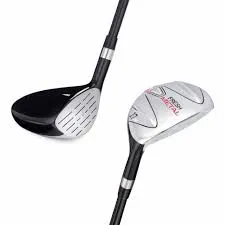
Both fairway woods and hybrids can cover similar lofts but behave differently. Treat this like selecting between two architectures: one is a shallow, high-speed convolution (fairway wood), the other a more robust, turf-forgiving transformer (hybrid).
Use a fairway wood if:
- You can sweep the ball or have a shallow AOA from the deck.
- You want a lower-to-mid trajectory with the option for roll after landing.
- You want an easier tee option than a driver and the ability to shape shots.
Use a hybrid if:
- You struggle to hit fairway woods cleanly from the deck.
- You play in areas with thick, rough hybrids that are cut through better.
- You prefer an iron-like feel and simpler turf interaction.
Many fitters Recommend Testing both at the same loft (for example, a 3-wood vs a 19° hybrid) and choosing whichever configuration yields better carry, lower dispersion, and better turf interaction for your swing.
How to hit fairway woods: step-by-step
Hitting fairway woods consistently is more about sequence and contact than raw power. Below are concrete setup cues, swing mechanics, and drills that align with natural language coaching signals and measurable outcomes.
Set up & ball position
- Off the tee (3-wood): Ball slightly forward of center (just inside the left heel for right-handers). Stand slightly narrower than with the driver. Weight slightly forward (≈55/45).
- From the deck: Ball just forward of center but not as far forward as the driver. Keep stance slightly narrower, maintain weight forward, and set a level spine angle. The goal is to sweep the ball, not strike steeply downward.
Swing Path & Angle of Attack
- 3-wood off the tee: Use a neutral or slightly upward AOA. Keep a driver-like feel but shorten the backswing slightly for control.
- From the fairway: Think “sweep.” The lowest point of your swing should occur at or just after the ball. Visualize skimming the turf; this shallow bottom reduces fat shots.
Tempo & release
Smooth rhythm beats force the club. Use a ¾ to full swing depending on the required distance. Shorten the swing if control decreases. For slower swingers, accelerate smoothly through impact rather than trying to increase hard speed.
Drills
- Broomstick sweep: Place a broomstick a few inches behind the ball. Practice swinging so the clubhead grazes the turf behind the ball without hitting the broom. This encourages a shallow AOA and cleaner contact.
- Tee-low sweep: Tee the ball low (just off the turf) and practice sweeping shots with the fairway wood to get comfortable with the forward ball position.
- Impact bag: Use a soft impact bag to train forward shaft lean and compressing the ball slightly at impact.
Low-spin control
To lower spin and increase roll: move the ball slightly back in your stance, use a stiffer tip shaft, and consider a forward-CG head. Slightly delofting at address (less pronounced) can reduce spin verify effects on a launch monitor before committing.
Troubleshooting
- Thin shots: Ball too far forward or an upward AOA off the deck. Move the ball slightly back and shallow the bottom of the swing.
- Fat shots: Ball too far back or descending too steeply. Move the ball forward and focus on sweeping the club.
- Left misses (hooks): Check face angle, excessive release, or grip pressure.
- Right misses (slices): Check clubface at impact and consider a draw bias head if needed.
Practice with intent: Use launch monitor feedback and 10-shot averages. Track mean carry, ball speed, launch, and spin. Improve one metric at a time (e.g., reduce spin while maintaining launch) rather than chasing distance only.
Maintenance, headcovers & shaft care
Fairway woods are durable but benefit from simple maintenance. Treat your clubs like instruments: small care actions preserve performance.
- Cleaning: Wipe the face after each round. Use a soft brush to clean grooves and the sole. Dry thoroughly before returning to the bag.
- Headcovers: Use headcovers to protect crowns and faces in the bag. Crowns scratch more easily than they affect performance, but cosmetically, they matter to many players and affect resale value.
- Shaft checks: Inspect for ferrule separation, unusual wobble, or visible cracks. If you feel timing issues or notice distance loss, consider a shaft inspection.
- Re-grip: Re-grip every 12–18 months for regular players. Grips affect face angle control and comfort.
- Avoid heat: Don’t leave clubs in hot cars or prolonged direct sunlight. Heat can damage shafts and grips.
- When to re-shaft: If you experience consistent distance loss, timing problems, or physical damage. Re-shafting can noticeably change launch and feel; consult a fitter.
Common Mistakes to Avoid When Buying Fairway Woods
Avoid these frequent errors; they’re low-cost to fix when you know them.
- Buying by hype alone. Ads promise distance and glamour, but every head has tradeoffs in spin, launch, and turf interaction. Test before you buy.
- Ignoring the shaft. Two identical heads with different shafts can produce very different outcomes. Shaft choice often matters more than the model name.
- Trusting one good shot. Use 10-shot averages and standard deviations. A single long carry is noise; consistency is the signal.
- Testing only on mats. Mats can hide turf-interaction issues. Whenever possible, turf test similar to your course.
- Assuming adjustability fixes everything. Adjustable settings are helpful, but won’t compensate for the wrong shaft or a head shape that doesn’t suit your setup.
- Not matching the course conditions. If you play firm, fast courses, lower spin and stronger lofts can be advantageous. For softer courses, higher launch and more spin help hold greens.

FAQs
A: Start here: slower swingers (<80 mph) try 15–16.5°, mid speeds 13.5–15°, fast swingers 12–13.5°. Use a launch monitor to confirm.
A: If you miss fairway woods fat or thin often, a hybrid may be easier. Test both at the same loft to compare carry and dispersion.
A: Re-grip every 12–18 months for regular players. Replace the shaft if you notice consistent distance loss or timing problems.
A: Yes, many players use a 3-wood off the tee for control. Use a slightly forward ball position and a smooth swing.
A: They help tune loft and shot shape, but they won’t fix a bad shaft or a head shape that doesn’t suit you. Test first, then use adjustability to refine.
Conclusion
Fairway woods are Highly Successful when matched to the player’s swing and goals. Treat fitting like a data problem: collect clean inputs (swing speed, AOA, launch, spin), evaluate with robust metrics (10-shot averages, dispersion), and choose the spec with the best trade-off between carry and comparability.