

Introduction
Golf Gloves Men wear are an essential part of a golfer’s equipment. A good golf glove improves grip, protects your hand from blisters, and helps you maintain control of the club in all conditions. Whether you play casually or competitively, the right glove can make every swing feel more secure and comfortable. Men’s golf gloves come in different materials such as leather, synthetic, and hybrid designs, each offering a balance of feel, durability, and weather performance. Choosing the correct size and material ensures better performance, longer glove life, and a more confident game on the course.
Why this guide matters
Your glove is the only item that stays in constant contact with the club every swing. It directly affects grip security, comfort, tactile feedback, and how long you can play before blisters or grip slips become a problem. The right glove saves shots; the wrong glove costs focus. This guide is practical: measurement, material selection, simple durability testing, maintenance, and product recommendations tailored to common play styles and climates.
What is a men’s golf glove and why does it matters
A golf glove is a thin glove usually worn on the lead hand (left hand for right-handed golfers). Its primary functions:
- Improving grip increases the friction between skin and club handle.
- Protecting skin prevents blisters and reduces wear on the palm.
- Enhanced feel thin leather provides better feedback.
- Support in bad weather, all-weather gloves keep grip when wet.
Because it’s directly involved in force transfer and touch, small differences in fit and material matter a lot.
Quick comparison
| Pick | Material | Best for | Durability | Price bucket |
| Titleist Players | AAA Cabretta leather | Tour feel/feedback | Medium | Mid-premium |
| FootJoy WeatherSof | Synthetic WeatherSof | All-weather / value | High | Budget–Mid |
| Bionic StableGrip 2.0 | Leather + engineered panels | Sweaty hands/durability | Very high | Mid |
| FootJoy StaSof | Premium Cabretta | Soft feel/everyday | Medium | Premium |
| Under Armour Medal | Synthetic stretch | Breathability/budget | Medium | Budget |
Use this table as a filtering step; later sections expand on pros and cons and who each glove fits best.
How to measure your hand: printable size chart
Tools: tape measure or printed ruler.
Take two measures:
- Middle-finger length: from the wrist crease (where your hand bends) to the tip of the middle finger.
- Palm circumference: wrap the tape around the widest part of your palm (across the knuckles), excluding the thumb.
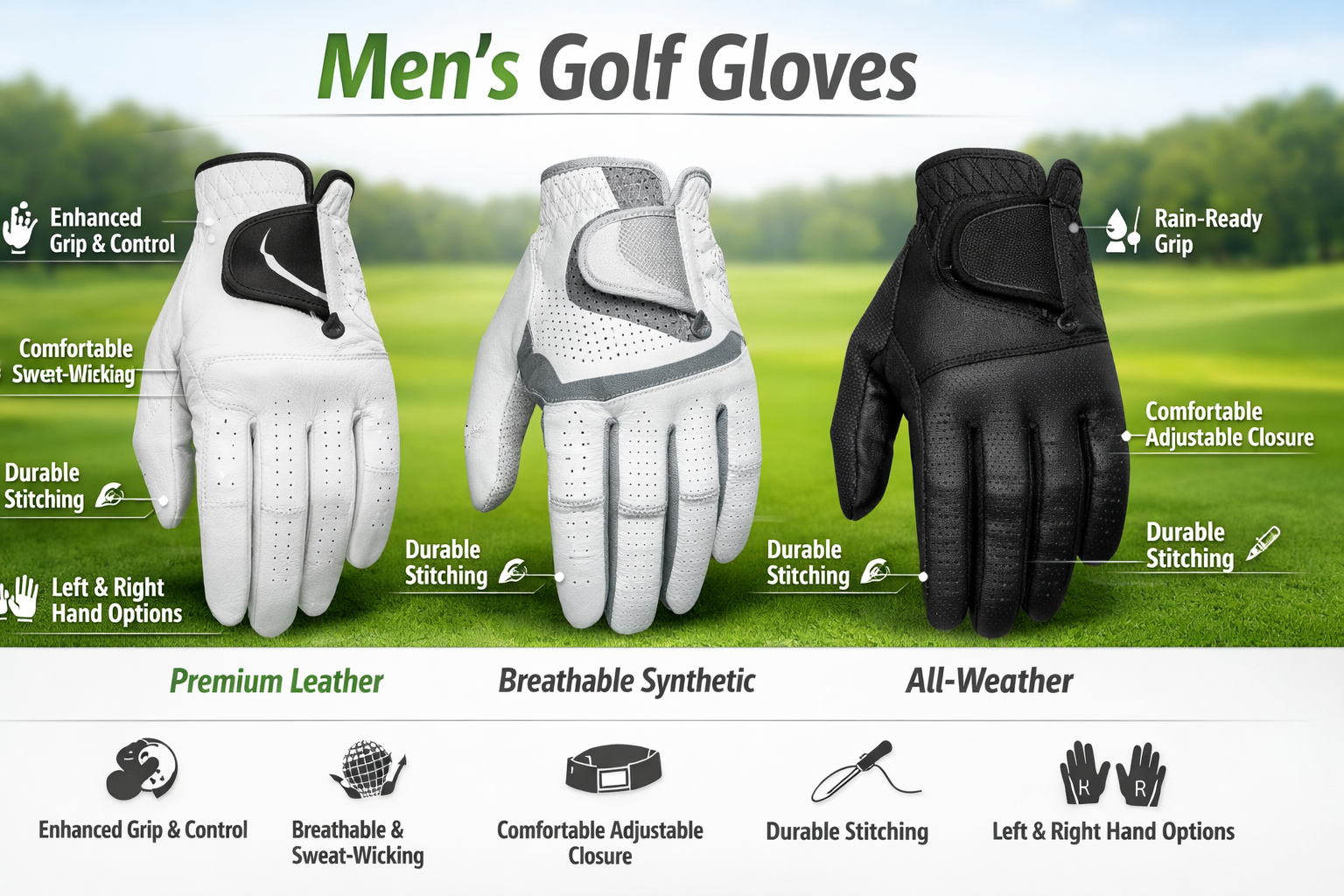
Cabretta leather vs synthetic: Which should you choose?
Cabretta leather
Pros: Ultra-thin, exceptionally soft, excellent feedbackfavored by many tour pros.
Cons: Wears faster in high humidity or heavy daily use; costs more.
Synthetic/all-weather
Pros: Durable, Affordable, performs well in wet conditions and heavy practice, often machine washable (check label).
Cons: Slightly thicker; some loss of direct feel compared to leather.
Hybrid (leather + synthetic)
Pros: Attempts to blend leather feel with synthetic durabilitycommon approach for targeted panels.
Cons: A compromise between the full leather feel and the absolute longevity of the best synthetics.
Rule of thumb: Play mostly dry and want to feel → Cabretta. Play daily or often in rain → synthetic/hybrid.
How to choose the right men’s golf glove step-by-step
- Measure your hand with the printable chart.
- Pick your material: leather for feel, synthetic for durability.
- Consider climate: humid or rainy → synthetic; dry → leather.
- Check fit features: flat seams, secure closure, stretch panels across knuckles.
- Test on the course: try during practice before committing.
- Rotate gloves: keep a practice glove for range and a premium glove for rounds.
- Buy multi-packs for range/practice to save money.
Top 8 men’s golf gloves full reviews & who they’re for
Below are concise reviews of what each glove excels at and caveats.
1. Titleist Players Glove Best for premium feel
- Material: AAA Cabretta leather
- Best for: Tournament players and shot-makers
- Pros: Thin, superior feedback, consistent fit.
- Cons: Not ideal in heavy rain; premium price.
2. FootJoy WeatherSof Best value / all-weather
- Material: Synthetic WeatherSof
- Best for: Daily players and wet climates
- Pros: Durable, consistent tack, great value.
- Cons: Less tactile than pure leather.
Bionic StableGrip 2.0 Best for sweaty hands & durability
- Material: Leather with engineered grip panels
- Best for: Heavy-use players, sweaty palms
- Pros: Engineered padding and grip reduce slipping, very durable.
- Cons: Bulkier feel than thin leather.
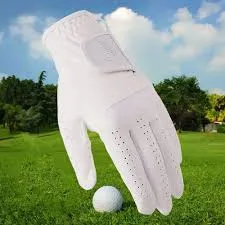
FootJoy StaSof Best premium everyday leather
- Material: Premium Cabretta leather
- Best for: Comfortable daily play with a good feel
- Pros: Soft, comfortable, reliable.
- Cons: Durability is affected by humidity.
Under Armour Medal: Best budget breathable synthetic
- Material: Synthetic stretch
- Best for: Beginners and budget buyers
- Pros: Affordable, breathable, good fit options.
- Cons: Shorter lifespan than higher-end synthetics.
TaylorMade Tour Preferred Best Cabretta alternative
- Material: High-grade Cabretta leather
- Best for: Players wanting an alternative to Titleist with a slightly different fit/finish
- Pros: Very soft, premium feel.
- Cons: Premium price band.
Srixon All-Weather Best hybrid for mixed play
- Material: Hybrid leather/synthetic panels
- Best for: Mixed climates and versatile players
- Pros: Balanced performance for wet/dry conditions.
- Cons: Works as a compromise rather than excelling only at one thing.
Callaway Tour Authentic
- Material: Leather with tacky palm treatment
- Best for: Players needing extra traction on the palm
- Pros: Tacky surface improves traction.
- Cons: Tacky treatment can wear off depending on usage.
Detailed head-to-head comparison
Feel (1–5): Titleist 5, FootJoy WeatherSof 3, Bionic 3.5, FootJoy StaSof 4.5
Wet weather: Titleist poor, WeatherSof excellent, Bionic good, StaSof fair
Durability: Titleist medium, WeatherSof high, Bionic very high, StaSof medium
Price: Titleist mid-premium, WeatherSof budget–mid, Bionic mid, StaSof premium
Best for: Titleist tour feel; WeatherSof daily/all-weather; Bionic sweaty/ heavy use; StaSof everyday premium.
Durability & at-home abrasion test protocol you can run
Readers trust repeatable tests. This simple procedure helps quantify wear.
Materials
- 1 new glove (document visually)
- 800–1000 grit sandpaper or rubbing block
- Small scale (grams)
- A weighted club or wrist weight
- Camera or phone for photos
Protocol
- Photograph the glove (palm, seams, fingers) and weigh it.
- Rub the palm on sandpaper using steady pressure for 50 cycles OR make 20 full swings holding a weighted club against a net to simulate friction.
- Re-photograph and reweigh. Inspect seams and surface for delamination, holes, or noticeable thinning. Rate tack subjectively from 0–5.
Report
- % change in weight (wear loss)
- Visual evidence (before/after photos)
- Subjective tack score change
Buyer personas which glove for which golfer
- Sweaty Hands: Look for breathable synthetics, perforated palms, and moisture-wicking liners (Bionic StableGrip, breathable FootJoy models).
- Cold / Winter Golf: Use fleece-lined winter gloves or layer a thin leather glove under a winter shell for insulation.
- Left-Handed Players: Most brands offer left/right options. Verify SKU before purchase.
- Cadet / Short-Fingered Hands: Cadet cuts (shorter fingers, wider palms) reduce bunching. FootJoy offers cadet sizing.
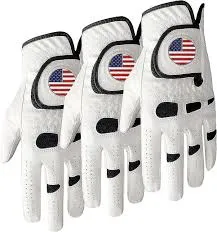
- Budget / Range Players: Buy 3- or 5-packs of WeatherSof-style synthetics and reserve premium gloves for rounds.
Fit checklist: what to look for when trying a glove
- No bunching at finger joints.
- Closure is secure but not bulky.
- Flat seams to prevent hotspots and blisters.
- Stretch panels for movement across the knuckles.
- If you want a second-skin leather fit and you’re between sizes, size down. For synthetic/all-weather, choose your regular size.
Care & maintenance make your glove last
Leather gloves
- Wipe clean with a damp cloth.
- Air dry naturally (no heaters or direct sun).
- Use leather conditioner only if the brand recommends it.
Synthetic gloves
- Many can be machine-washed on a gentle cycle. Check the label.
- Air dry only.
Rotation
- Keep one practice glove and one Tournament Glove; rotating extends life.
Storage
- Store in a cool, dry place. Avoid leaving a wet glove balled up around a grip for long periods.
Where to buy pricing & regional notes
- United States: Amazon, PGA Tour Superstore, manufacturer stores (Titleist, FootJoy).
- United Kingdom: Brand EU stores and specialist golf retailers.
- Australia: Local golf pro shops and brand distributors.
- Pakistan: Daraz, local sports retailers, or order internationally (confirm SKU & size).
Always verify the SKU and size with the retailer before making a purchase.
Common mistakes to avoid when buying men’s golf gloves
- Buying without measuring.
- Choosing leather for humid climates repeatedly.
- Using one glove for both range and rounds, rotate.
- Ignoring seam placement (can cause hotspots).
- Buying sight unseen without checking the return policy or size guidance.
FAQs
A: Measure your middle-finger length and palm circumference. Use the brand size chart. If you want a tight leather fit and you are between sizes, size down one. For synthetic gloves, use your normal size.
A: Leather gives a better feel and feedback. Synthetic lasts longer and works better in the rain. Pick leather for control and synthetic for durability and wet play.
A: It depends. Range players may need to replace their gloves every few weeks. Weekend players may keep a leather glove for months. Use our simple abrasion test to see real-life wear.
A: Only if the brand says it’s safe (usually for some synthetics). Leather gloves should be wiped clean and air-dried.
A: Look for breathable synthetics and engineered grips. Bionic StableGrip and certain FootJoy models are built for sweaty palms.
Conclusion
Choosing the right Golf Gloves Men should wear in 2026 comes down to three simple factors: fit, material, and playing conditions. A glove that fits correctly will improve grip security, reduce hand fatigue, and prevent blisters. Measuring your hand accurately and selecting the proper sizeespecially considering cadet or left-hand optionsmakes a bigger difference than brand alone. Material choice should match how and where you play. Cabretta leather gloves deliver an unmatched feel and feedback, making them ideal for competitive rounds and dry climates. Synthetic and all-weather gloves offer superior durability and moisture control, which suits frequent practice, humid weather, and rainy conditions. Hybrid gloves provide a balanced option for golfers who want both comfort and longevity.