

Introduction
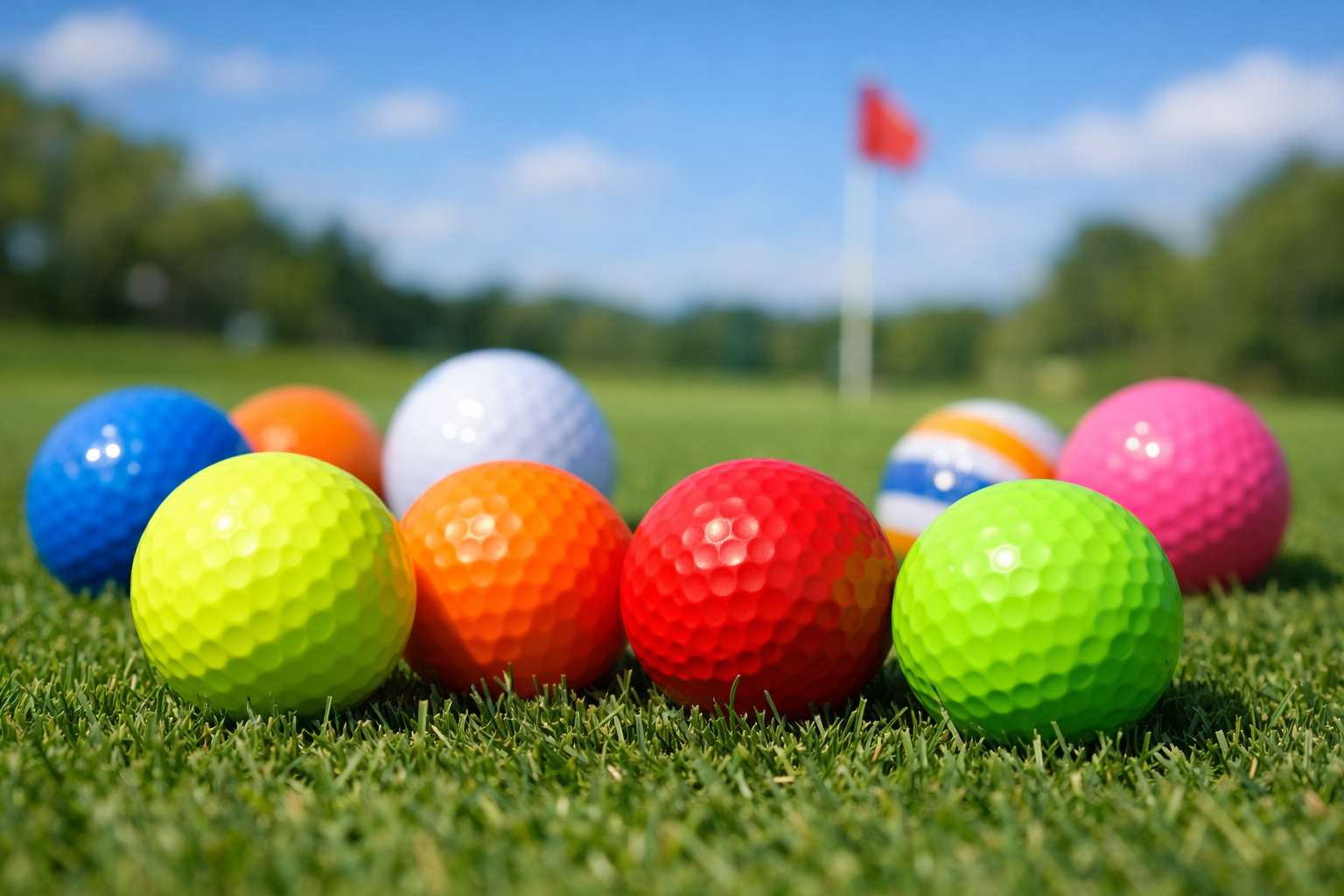
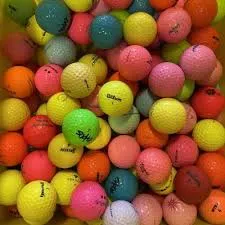
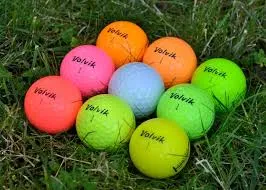
Colored Golf Balls often improve on-course visibility (especially neon yellow and neon orange) and can speed up play while cutting lost-ball frustration. They are legal for tournament play only if the exact model and color/finish appear on the USGA/R&A List of Conforming Golf Balls. Manufacturers must submit each color separately. This guide reframes those facts in NLP / data-science terms, gives a color-by-condition matrix, a reproducible test protocol (dataset + evaluation metrics), product buckets (visibility/performance/budget), and FAQs so you, as an empirical practitioner, can pick the right color and model for your game.
Executive summary
Framed as a supervised classification problem: the label is “easy-to-track” (binary or continuous), and features include hue, luminance, saturation, surface finish, pattern (stripe/flash), and ambient conditions (sky, turf, leaves, light level). Empirical tests and human visual-acuity studies show high-luminance, high-saturation hues like neon yellow and neon orange yield higher detection rates (higher true-positive tracking in flight and shorter search time on the ground). Color is a perceptual feature; it changes the human observer’s input distribution, not the ball’s physical dynamics (unless the finish alters reflectance). For tournament play, color is a constrained categorical variable: each color/finish is a separate entry on the USGA/R&A List of Conforming Golf Balls (treat conformity as dataset-level metadata / external validation).
Problem statement: What colored golf balls change
We cast the visibility problem as: given an event E (ball flight and landing) in environment C (conditions), what is the probability P(see|ball, color, observer, conditions)? The objective is to choose a color such that P(see) is maximized while respecting constraints (budget, feel, conforming status).
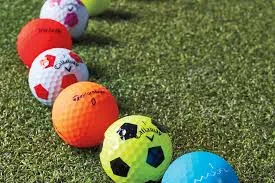
Key features (input variables):
- Hue (categorical; e.g., white, neon-yellow, neon-orange, pink, green)
- Luminance (numeric; perceptual brightness)
- Saturation (numeric)
Finish (categorical: matte vs glossy vs iridescent) - Pattern features (binary: stripe, logo contrast, two-color “flash”)
- Observer factors (visual acuity, age)
- Ambient conditions (sky type, foliage, grass hue, light level)
- Task type (flight-tracking vs search-on-ground vs putting alignment)
Key labels (outcomes to measure):
- Flight-visible (binary per-shot or probability)
- Seconds-to-find (continuous)
Putability (alignment-mark clarity; rated 1–10) - Conformity (boolean: listed on USGA/R&A for that exact model+color)
Important note (noise model): Observers introduce variance. A robust dataset should include multiple observers and repeated shots; use repeated-measures statistics or mixed-effects models to estimate effect sizes.
Data model: how color affects visibility
Split the visibility problem into two subtasks: tracking in flight and finding on the ground.
Flight tracking
When a ball flies, the image of the ball is a small, moving token against a dynamic background (sky, clouds, treeline). This is a classic signal-detection task: color that maximizes contrast with the background increases the signal-to-noise ratio (SNR) for the human visual system, improving detection probability. High-luminance, high-saturation hues (neon-yellow and neon-orange) increase SNR across a wide range of backgrounds.
Model analogy: imagine the observer as a detector whose receptive field is tuned to certain chromatic channels; boosting the feature values (luminance & saturation) moves the ball’s token away from typical background clusters in color-space (Lab or HSV), increasing separability (measured by Mahalanobis distance in color-space).
Ground contrast
On the ground, the cue distribution is different: turf, leaves, debris, shadow patches, wet grass. The optimal hue depends on the common background cluster for your course/season. If turf is a specific green, then a hue opposite in color-space (warm hues like orange) generally maximizes contrast. In low light, Luminance Dominates: high-luminance colors remain perceptible when chromatic contrast falls.
Finish matters: matte surfaces reduce specular highlights, which can cause transient glare, effectively reducing false negatives in bright sun. Conversely, glossy/iridescent finishes can create specular artifacts that sometimes hurt consistent detectability.
Rules & constraints
From a model-validation perspective, tournament eligibility is a constraint function g(model, color) → {0,1}. The USGA and R&A treat each color/finish entry as a separate submission; thus, “Chrome Soft (yellow)” and “Chrome Soft (white)” are distinct items in the conformity dataset. The List of Conforming Golf Balls is an external authoritative dataset updated regularly (practically monthly). If you intend to use a colored ball in competition, fetch the exact conforming-list entry (model + color + finish) and store it with your equipment metadata. Officials may ask to see proof; treat that PDF/screenshot as an external checkpoint.
Experimental protocol dataset creation, feature extraction, metrics, and reproducibility
If you want to test colors yourself like an NLP experiment, follow a reproducible pipeline. We describe it as you would document an empirical experiment: hypothesis, materials, procedure, dataset schema, metrics, and recommended analysis.
Hypothesis
H0: Color does not affect detection probability or search time.
H1: Certain high-luminance, high-saturation colors increase detection probability and reduce search time.
Materials/inputs
- A flat open driving area and a nearby area containing typical ground textures you face (fairway, rough, leaf-covered zone).
- Balls in each color you want to test (3 is a practical minimum).
- Stopwatch or phone with a timing app.
- Simple spreadsheet or CSV for results.
- 3–5 human observers (to control for inter-observer variance).
- A consistent tee and ball placement marker.
Sampling protocol
- For flight visibility: 5 long shots per color from the same tee position. Record lost_in_flight per shot (0/1).
- For ground-search: 5 short-to-mid shots (70–120 yards) aimed at mixed landing zones. Start the stopwatch at impact and stop when the ball is found; record seconds_to_find.
- For putting: roll 5 putts from 15 ft; observer rates ease-of-seeing and alignment-mark contrast on a 1–10 scale.
- Repeat the entire suite across at least three ambient conditions (sunny midday, overcast, dusk) to obtain condition-stratified results.
Feature extraction
- Compute flight_visible_pct = sum(visible)/n.
- Compute avg_seconds_to_find = mean(seconds_to_find).
- Compute composite visibility_index = (flight_visible_pct * 0.6) + ((1 / avg_seconds_to_find) * 100 * 0.4) (this mirrors the guide’s original index but can be generalized).
- Use bootstrapped confidence intervals for each metric (recommended: 1,000 bootstrap resamples).
Analysis pipeline
- Use paired tests (Wilcoxon signed-rank or paired t-test, depending on distribution) for within-observer comparisons.
- Estimate effect size (Cohen’s d) to quantify practical significance.
- For multi-condition data, fit a mixed-effects model with observer as a random effect and color + condition as fixed effects.
- Visualize: bar charts of flight_visible_pct by color, boxplots of seconds_to_find by color and condition.
Interpretation guidelines
- Look for colors that consistently outperform others across conditions (robust winners).
- If differences are small with overlapping confidence intervals, prefer the color that minimizes variance (consistency matters).
- Use practical thresholds: e.g., a 10% increase in flight-visible rate or a 30% reduction in search time is meaningful for most golfers.
Condition matrix color environment mapping
We convert the original color-by-condition matrix into a compact, condition-aware mapping that an analyst can use.
| Condition | Recommended Color(s) | Rationale (feature-space) |
| Low light/dusk | Neon orange, fluorescent yellow | Luminance dominates; high-brightness hues maximize SNR |
| Bright sun/glare | Matte neon yellow or lime green | Matte reduces specular glare; neon preserves chromatic separability |
| Autumn leaves / brown rough | Neon orange, red | Warm hues sit far from brown/leaf color-clusters |
| Green fairway/summer turf | Neon yellow, white (test locally) | Depends on local turf hue; pick whichever increases Mahalanobis distance |
| Wet/rainy/dark grass | High-saturation yellow/orange | Pops against dark, low-reflectance backgrounds |
Operational tip: Build a small “background color sample set” for your regular course (take photos of typical fairway, rough, leaf piles, and sky at various times) and compute color histograms. Choose the ball color whose mode in Lab/HSV space is farthest from the background histograms.
Product buckets are treated as clusters.
Instead of ad-hoc categories, treat product buckets as clusters in a product-feature embedding space where axes are visibility_score, spin/feel, and price.
Visibility-first cluster
Characteristics: high visibility_score, matte finishes, simple two-piece construction (lower cost than tour balls), often distance-biased.
Use case: players who frequently lose balls and prioritize detection over micro-spin control.
Example models (as exemplars verify current color SKUs):
- Titleist Velocity (matte orange)
- Bridgestone e6/e12 (neon variants)
Performance-first cluster
Characteristics: premium multi-layer construction, soft feel, spin control; colored runs exist but are often limited in SKU and may be seasonally released.
Use case: low-handicap or feel-sensitive players who still want color.
Example models:
- Callaway Chrome Soft (yellow runs when offered)
- Titleist AVX/Pro V1 colored limited-release (verify conforming color SKU)
Budget / Practice cluster
Characteristics: inexpensive two-piece nylon/distance balls, bright neon coatings, replaceable, great for high-loss practice.
Use case: range practice, drills where losing balls is acceptable.
Example models:
- Generic neon distance practice balls
- Srixon / Bridgestone practice runs (cheap colored packs)
Clustering note: You can embed ball models by features (price, layers, cover material, finish, color) and run k-means or hierarchical clustering to generate dynamic product buckets that adapt as new releases appear.
Quick comparison table
| Model (example) | Bucket | Typical best-for | Notes |
| Callaway Chrome Soft (Yellow) | Performance | Tour feel + color | Softer feel; test before comp use. |
| Titleist Velocity (Matte Orange) | Visibility | Max visibility + distance | Matte orange stands out in foliage. |
| Bridgestone e6 (Yellow) | Visibility / Budget | Straight flight, visibility | Good middle ground. |
| Srixon Soft Feel (Yellow) | Budget / Visibility | Soft feel, visible | Affordable colored run. |
| Generic neon distance (practice) | Budget | Practice & lost-ball tolerant | Cheap, great for training. |
Caveat: Manufacturers rotate color SKUs and limited runs; always confirm the specific color SKU and the conforming-list entry before relying on a ball for competition.
Care, markings, and tournament tips
- Markings: You may mark balls for identification and alignment. Keep markings within what event rules permit; avoid large decorative paint that materially alters the ball’s appearance. If in doubt, show the official a non-defaced backup ball of the same model/color.
- Finish wear: Colored paint can scuff and fade. Heavy chipping changes the visual token and might attract scrutiny; if a ball’s appearance changes drastically, consider replacing it for competition.
- Storage: Heat and UV exposure can fade pigments; store colored balls in shade to preserve color integrity.
- Proof: For tournaments, keep a screenshot or PDF of the conforming-list entry for your exact model+color in your phone or bag. Officials may request it.
- Marking for alignment: Use small, clean alignment marks; they’re allowed and often helpfuljust don’t change the ball’s net visual appearance beyond normal marking limits.
Pros & Cons
Pros
- Faster flight tracking and easier finding → reduces search time and speeds up the pace of play.
- Lowers lost-ball counts, potentially saving money.
- Available across price ranges, you can choose visibility-first, performance-first, or budget-first models.
Cons
- For competition, color must be validated on the USGA/R&A list. Each color is a separate submission, and not all colored runs are conforming.
- Glossy Or Iridescent finishes can reflect light and sometimes reduce consistent visibility.
- Colored coatings can scuff and chip, possibly altering the ball’s visual profile mid-round.
- Some players prefer white for tradition or for judging spin/greenside reaction visually.
Common mistakes to avoid
- Assuming color = performance: Color changes perception, not the physical aerodynamics (unless finish changes surface properties). If a colored SKU is built identically to the white SKU, expect performance parity.
- Not checking conformity: Using a non-listed colored SKU in competition risks penalties. Always verify.
- Buying practice-only balls for tournaments: Many budget neon balls do not meet competition specs.
- Ignoring finish type: Iridescent or multi-hue finishes can be visually appealing but sometimes inconsistent for tracking; the USGA scrutinizes finishes in submissions.
FAQs
A: Yes, but only if the exact model and color/finish appear on the USGA/R&A List of Conforming Golf Balls. Manufacturers submit each color separately,y and fees may apply. Always check the list before the competition.
A: For most players and many conditions, neon yellow and neon orange are easiest to track in flight and find on many ground backgrounds. But “best” varies by course and season; testing helps.
A: No color alone doesn’t alter aerodynamics. Performance changes come from core/cover/dimple design. If a colored version is built identically to the white version, performance should be similar.
A: Matte finishes usually reduce glare and can improve visibility in bright sun. Glossy or iridescent finishes can reflect light and reduce contrast in some angles. The USGA has rules about color ranges and finishes for submissions.
A: The List of Conforming Golf Balls is updated on the first Wednesday of every month. If you play tournaments, print or save the list before your event.
Conclusion
Colored golf balls are a Perceptual Intervention; they change the distribution of visual features arriving at the observer, not the underlying physics (unless finish alters reflectance). For most golfers, neon yellow and neon orange offer robust gains in flight detection and ground retrieval across many conditions. If you compete, treat conforming-list status as a non-negotiable external constraint